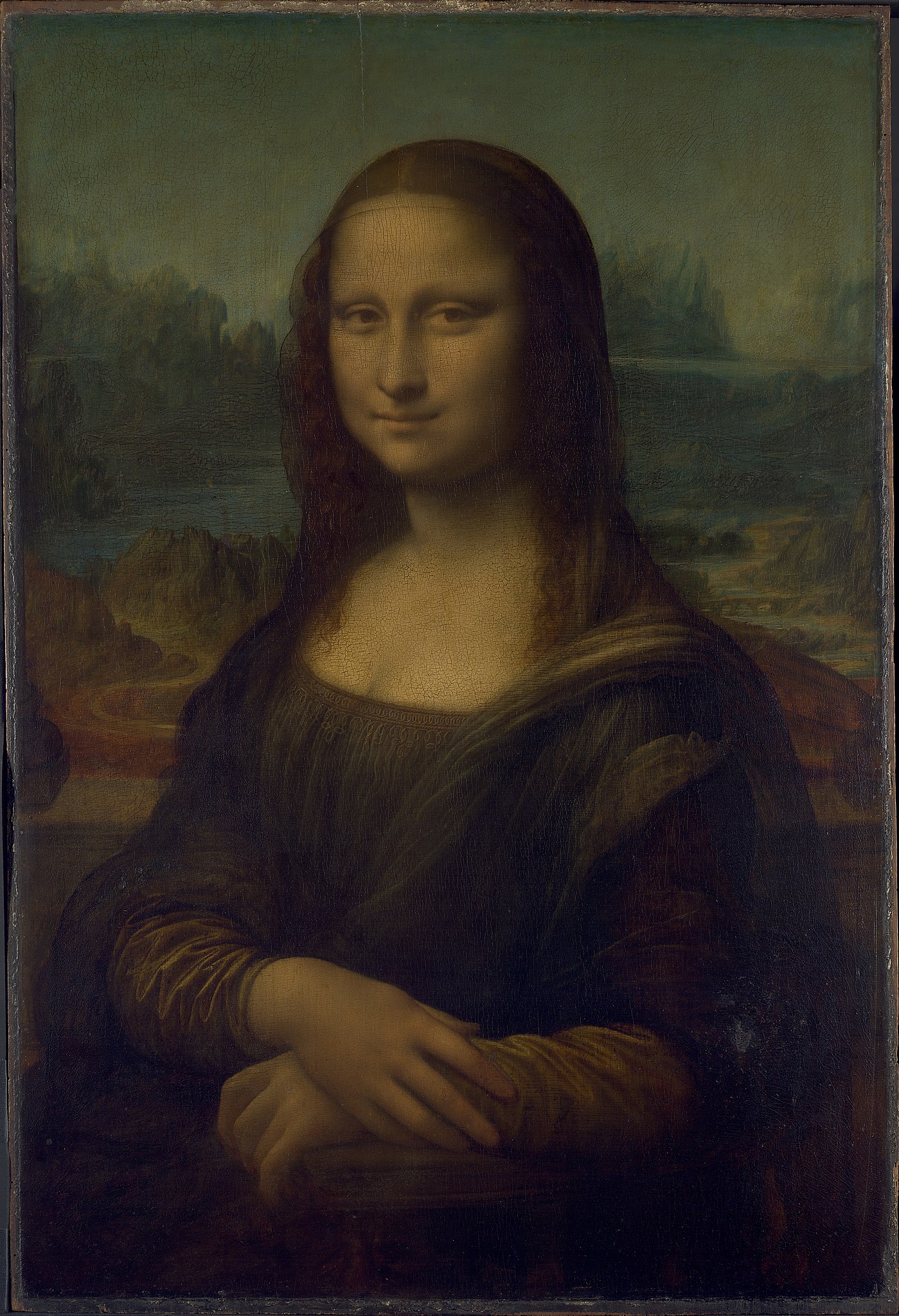
A symbol of beauty and womanhood, ambiguity and sfumato, a sensational art theft, the mechanics of a smile, and the most famous painting of all time shape our story today.
Let us travel back to the year 1503 in Florence, Italy, where Leonardo da Vinci was supposedly asked to paint a portrait of Lisa Gherardini, the wife of silk merchant Francesco del Giacondo (so Madam Gioconda in Italian or La Jaconde in French- Mona Lisa or Madam Lisa). Like everything else about this painting there is ambiguity about who the model is. Why a painter of Leonardo’s stature would accept a commission from a simple merchant? Why is there no record of it, and why was it not delivered and was still with Leonardo at his deathbed in 1519 (always with him and being perfected)?
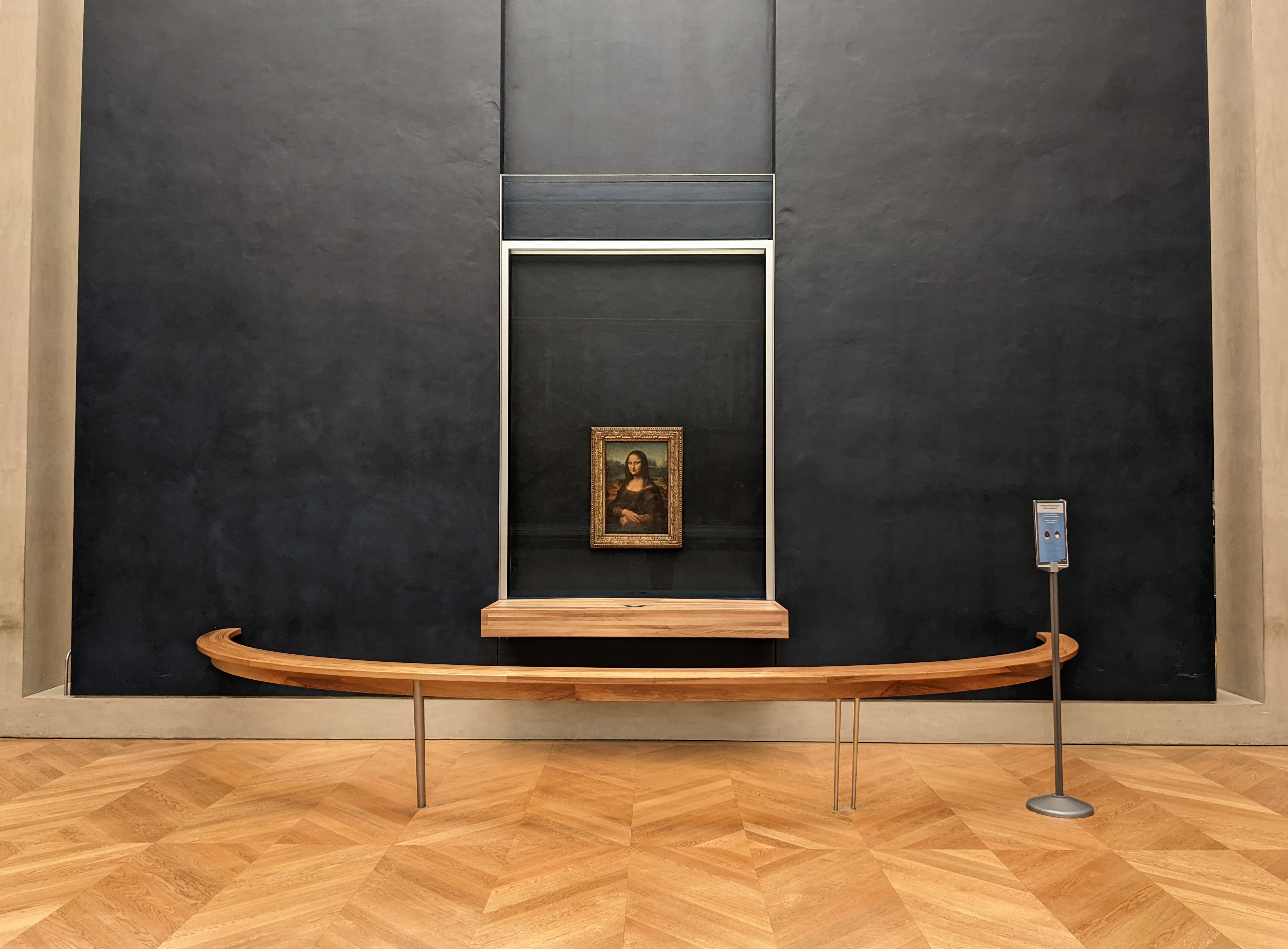
So why has such a small painting, only 77 by 53 CM or 21 to 30 inches, become such an iconic image ingrained in the brains of millions all over the world? Let’s step into the haze and see how Leonardo’s imagination and intellect combine to dazzle us once again.
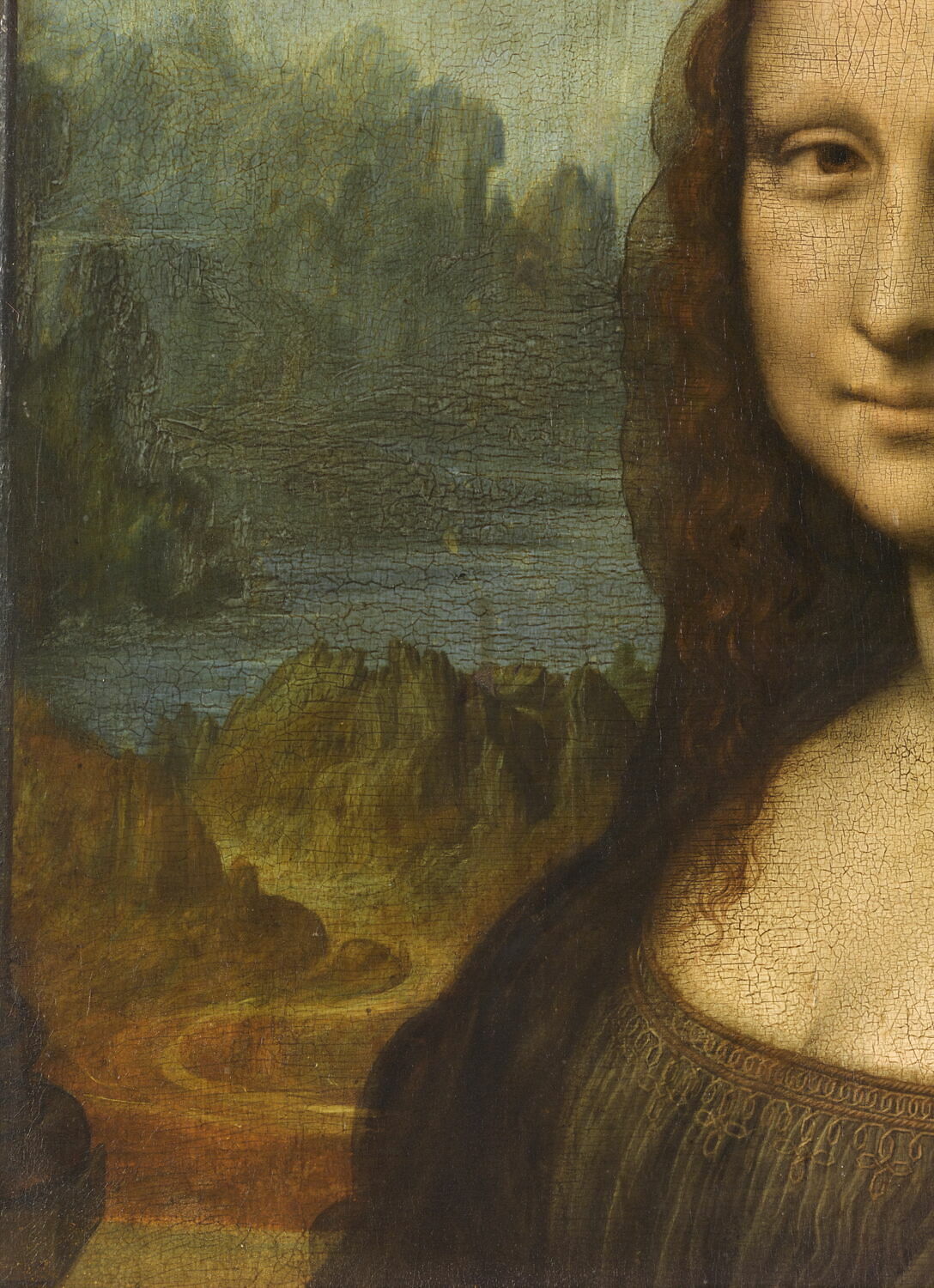
Sfumato means smoky and hazy in Italian, and it is this technique that dominates the Mona Lisa.
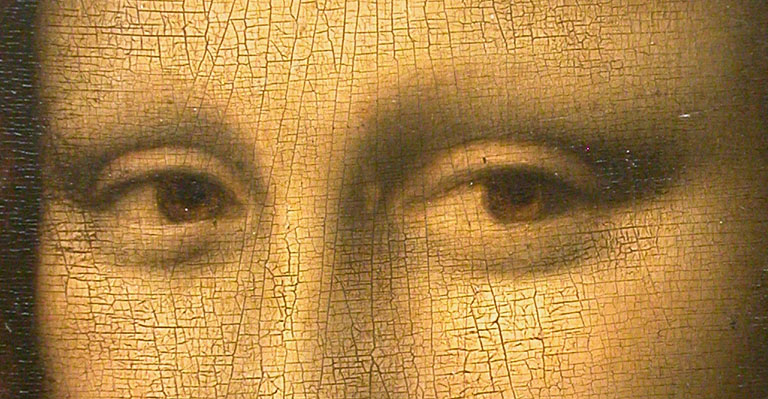
It is the subtle blending of light and shadow, the blending of colors softening the edges, creating a soft, hazy effect. There seems to be no edge-uncertainty; she seems to be both present and stepping out of a mist. Leonardo also uses Chiaroscuro here, which is a strong contrast of light and dark, creating an illusion of 3D forms.
This portrait is quite unlike the typical portraits of this age. The Mona Lisa is stripped of all her higher status adornments, no jewelry, simple dress, simple hair. Nothing distracts from that fascinating face, which is looking directly at you regardless of where you are and at what angle. She seems to watch you wherever you go. Ambiguous expression and eyes following you, and what about that smile? What is the meaning?
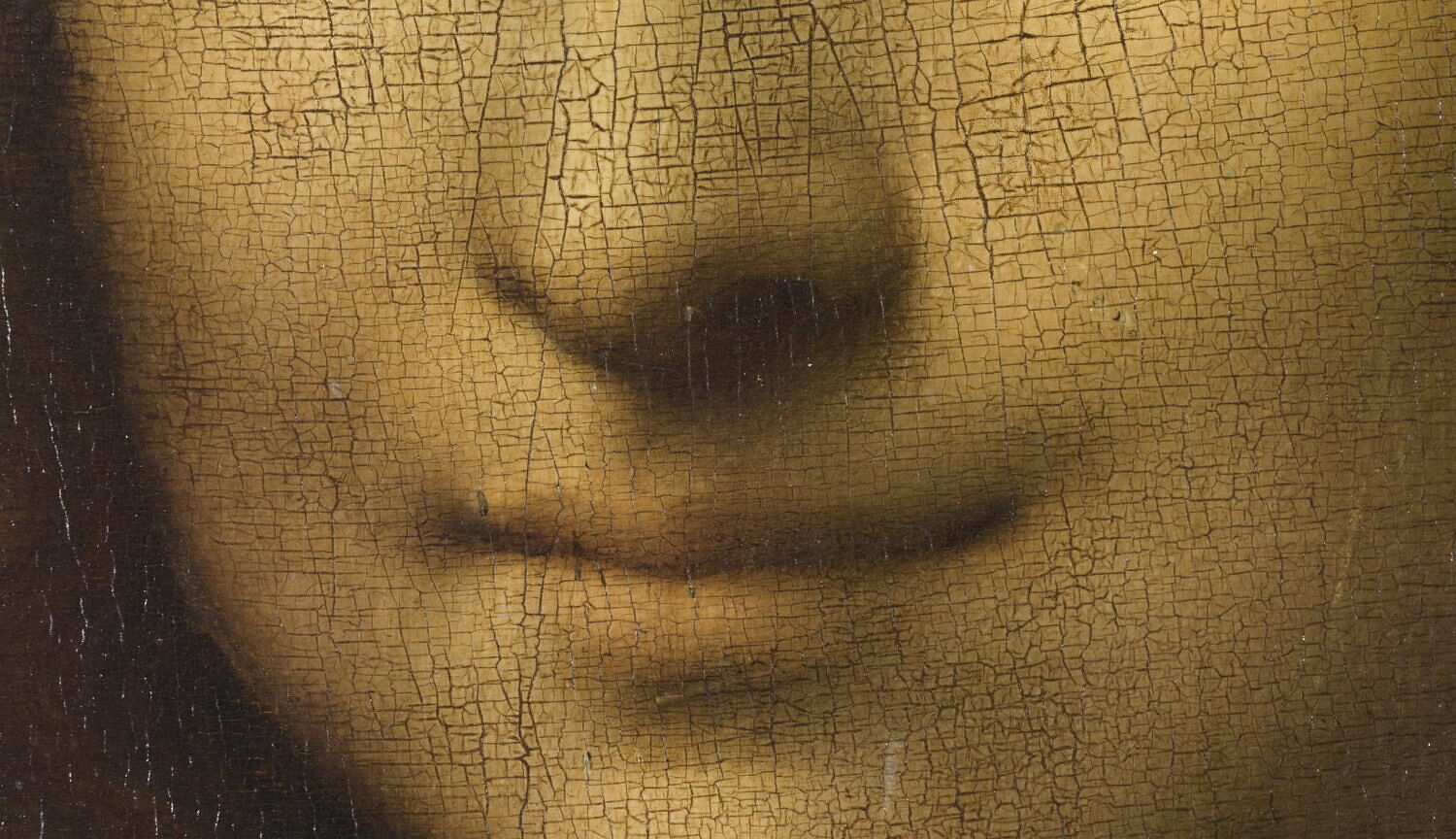
Leonardo was fascinated with both optics and how the muscles of the mouth work and how they shape a smile. His anatomical studies and dissections once again come into play here as he creates that mysterious gaze and that enigmatic smile. Look directly at her mouth, and there is no smile, but with peripheral vision, she is smiling. On/off illusive. Smiling figures were also not typical of this age.
What about the background? Is it an actual location, something imagined by Leonardo, or just a plain canvas hanging in his studio? There is, of course, much discussion, ambiguity, and research on this as well. What is clear is how Leonardo combines the realm of humanity with nature once again. Microcosm/Macrocosm
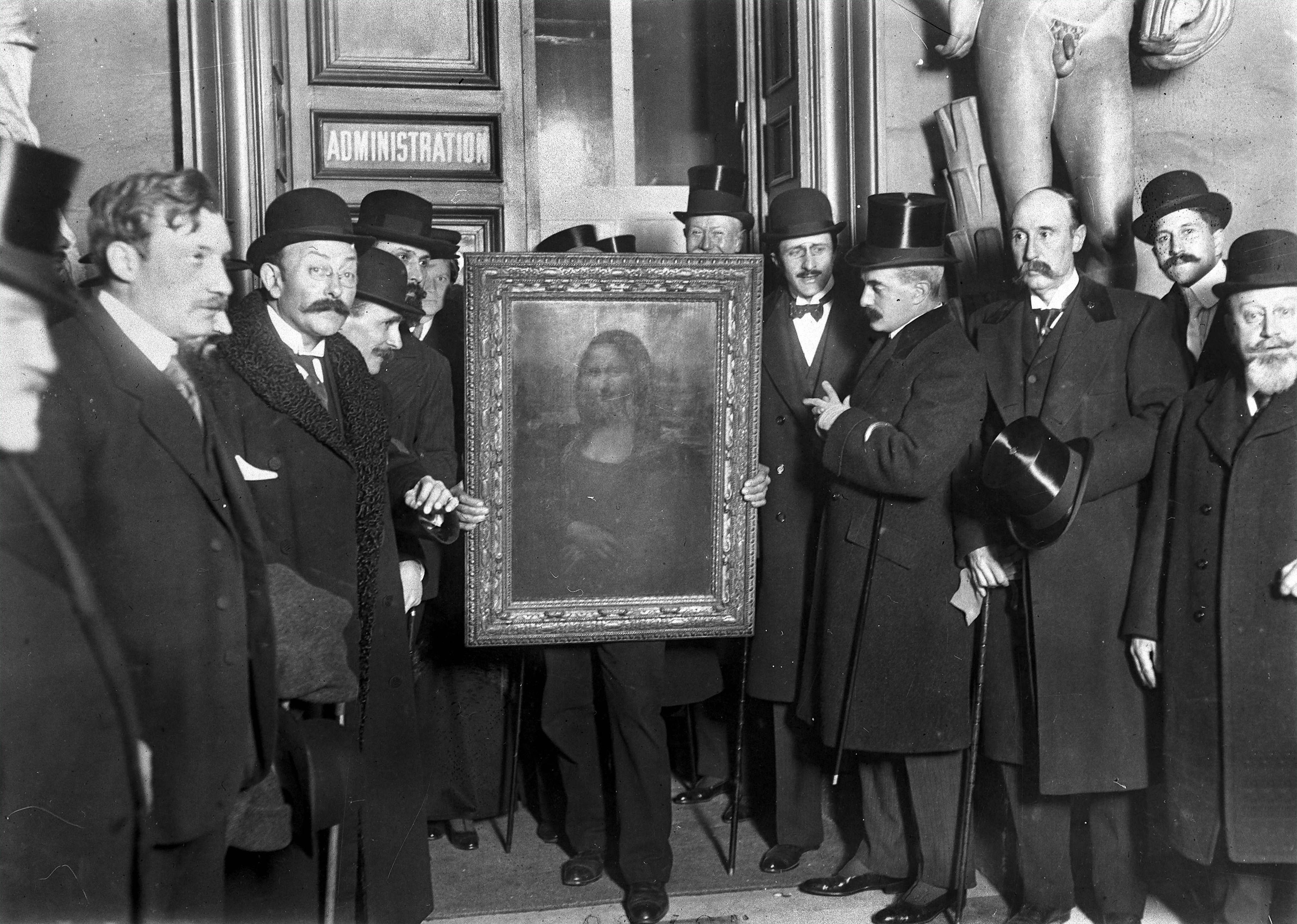
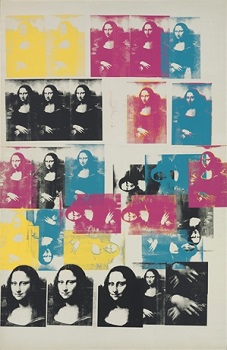
The Mona Lisa was already well regarded and was a star attraction at the Louvre museum in Paris, but a theft in 1911 perhaps accelerated its claim to fame. In 1911, Vincenzo Perugia, an Italian worker at the museum, simply walked off with it. It took them a day to figure out it was missing, but then the media created a sensational global storm, greatly enhancing its visibility to many people. The thief was motivated by a desire to return the painting to its home country of Italy. During the 2 years it was missing, people lined up just to see its empty spot on the wall at the Louvre!! The media capitalized on the scandal by commodifying her image. So, it is a chapter of sensationalism and fame and a lesson for museums to enhance their care and security. Another event also helped popularize the Mona Lisa, specifically in the US. In 1963, it came to the US for an exhibit and was greeted by President Kennedy, and later in the same year, Andy Warhol made his pop art version. The painting has been through much in its history, from hanging in Napolean’s bedroom in 1800 to theft, vandalism, and things being thrown at it. Today, it remains the focal point and main attraction at the Louvre.
Today, the image of the Mona Lisa seems to be burned into our psyche. It is a ubiquitous image that can be found on everything from cookie boxes to art parodies and has inspired musical compositions, films, literature, and so on. The classic song “Mona Lisa” by Ray Evans and Jay Livingston explores its enigmatic quality and has been performed by many singers, such as Nat King Cole and his daughter Natalie. Bob Dylan declared that Mona Lisa has the “highway blues.” She seems to carry the weight of the world and has seen centuries of joy and sorrow. The painting has a pervasive cultural presence.
Subtle nuances in this intriguing work continue to intrigue and inspire research and debate.
What is behind the smoke? What about that captivating gaze that follows you everywhere? What does that almost-there smile signify? Optical and perceptual illusion, emotional ambiguity, timeless beauty. Let’s pause, reflect, and discover our own meanings.
Always be curious, seek out the blurred lines, and be illuminated.