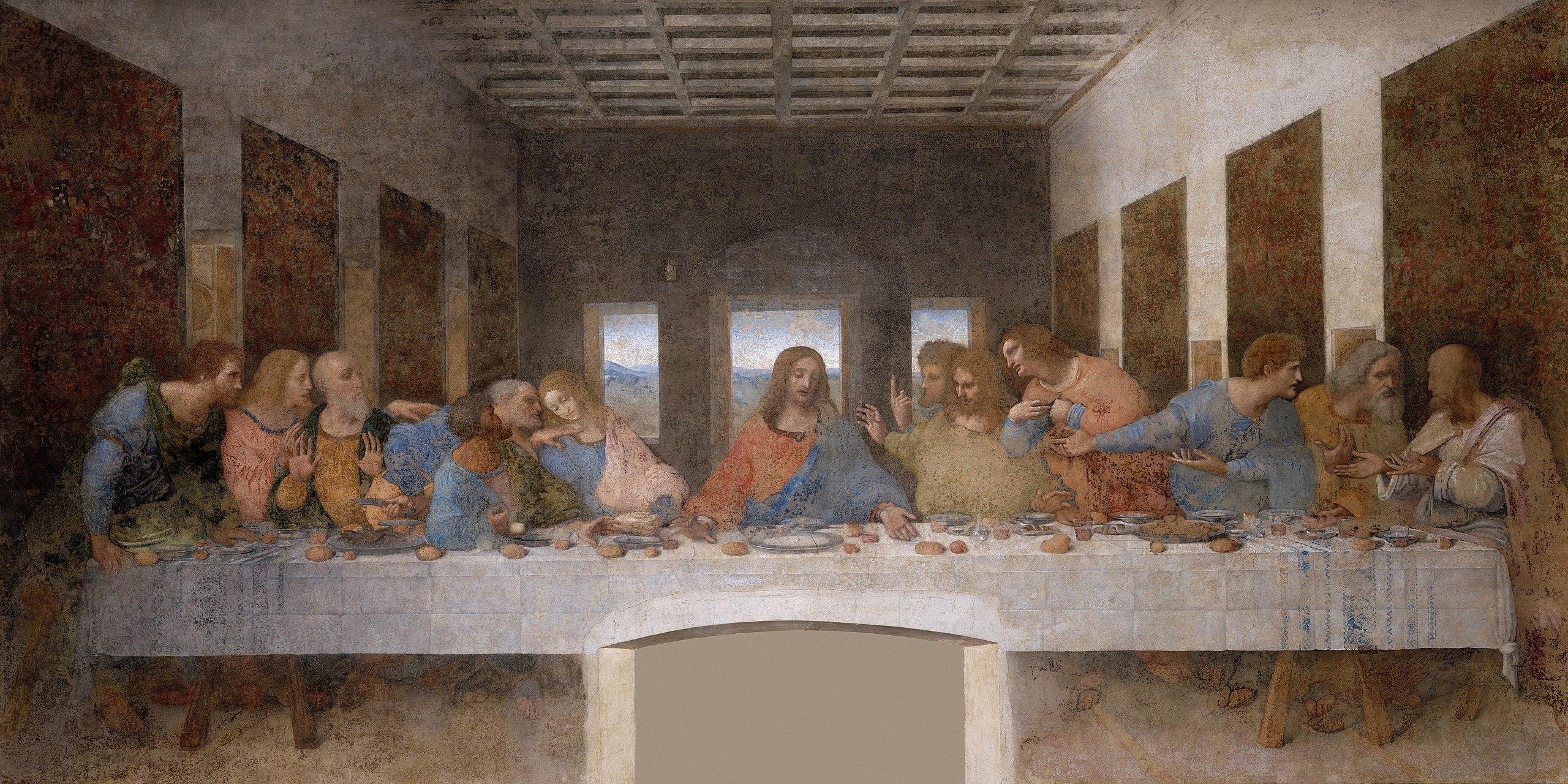
A painting as an immersive 3D theatrical thriller, a famous fateful declaration causing a symphony of raw emotions, religious transcendence, basic universal human nature, a masterful artist, and a divine figure form the framework of our story today.
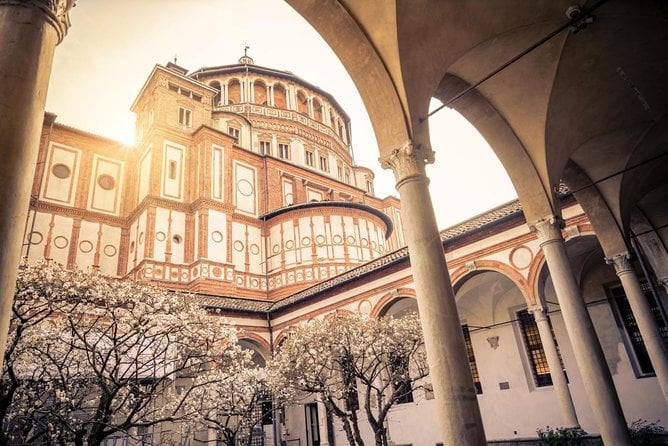
The most reproduced religious painting of all time, Leonardo da Vinci’s The Last Supper, is the subject of our story today. Once again, Leonardo’s mastery of technique/science merges with his artistry and understanding of humanity to create something unique and phenomenal.
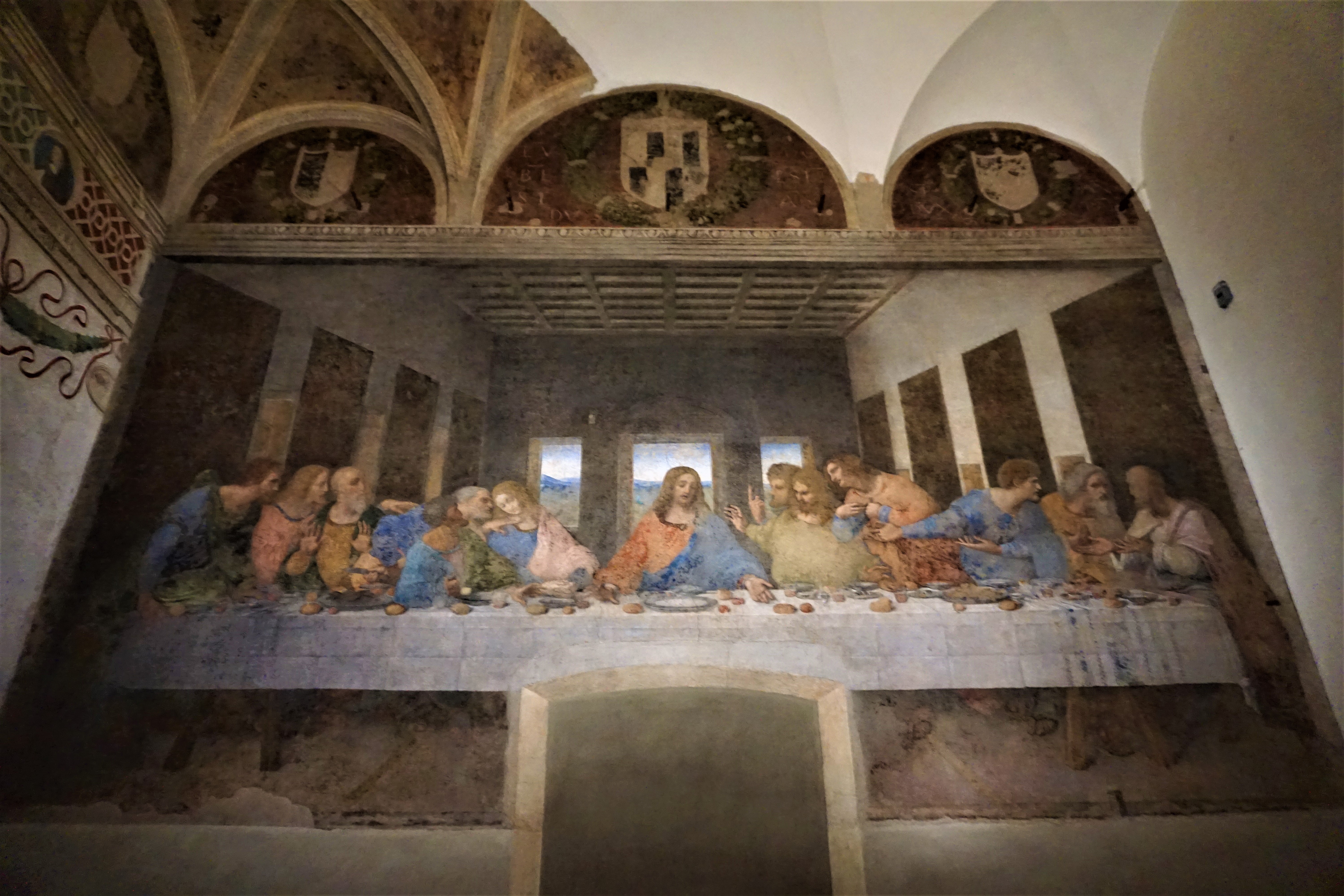
The painting shows Jesus and his 12 apostles in the dramatic aftermath when he declares to them that one of them will betray him, leading to his crucifixion. Duke Sforza, the ruler of Milan, Italy, desired to create a suitable mausoleum for his family at Santa Maria delle Grazie church, so he commissioned Leonardo to work on the north wall of the dining hall there. The work was done between 1495 and 1498, with Leonardo sometimes working from dawn to dusk and sometimes doing nothing but just staring at it for hours.
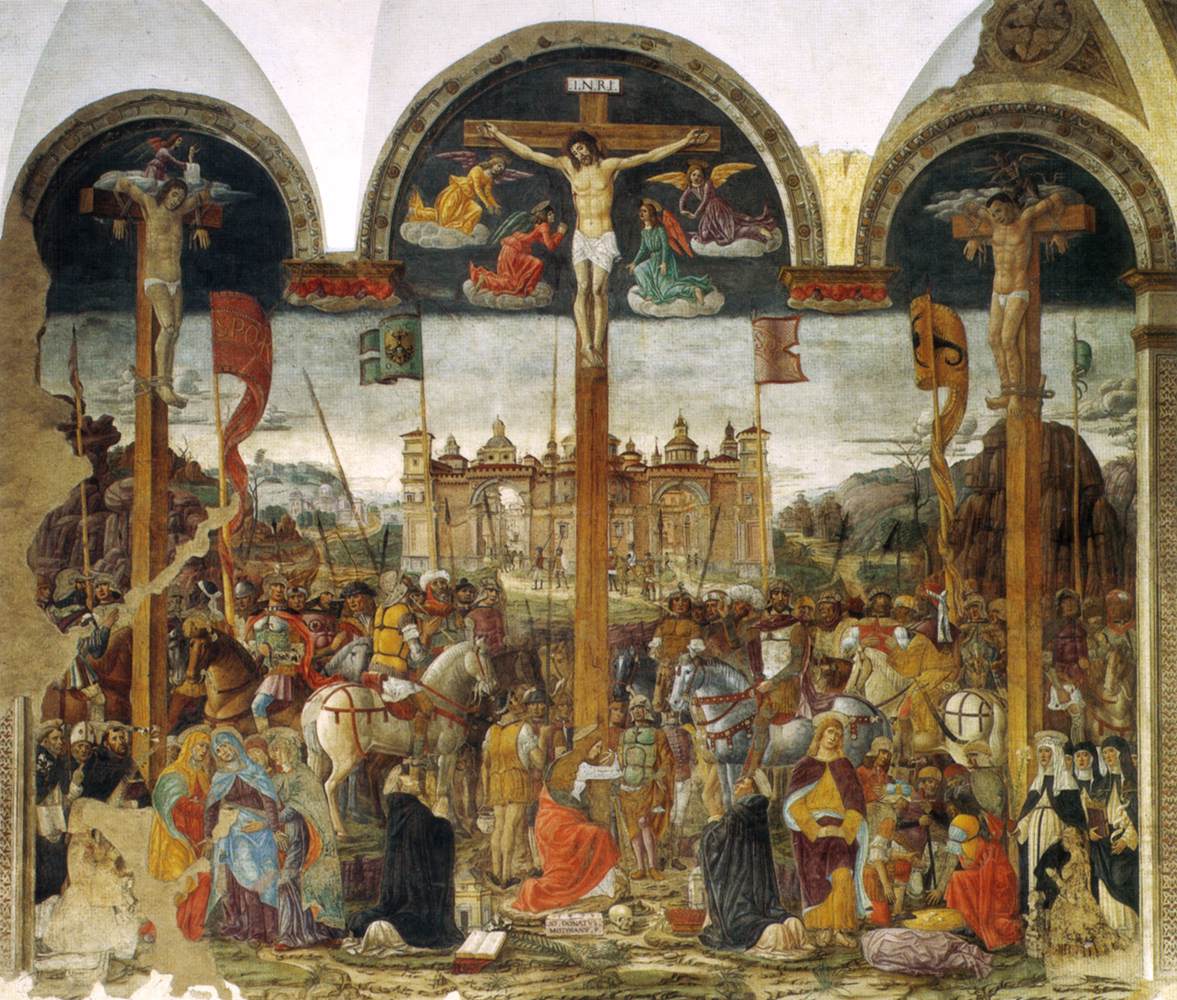
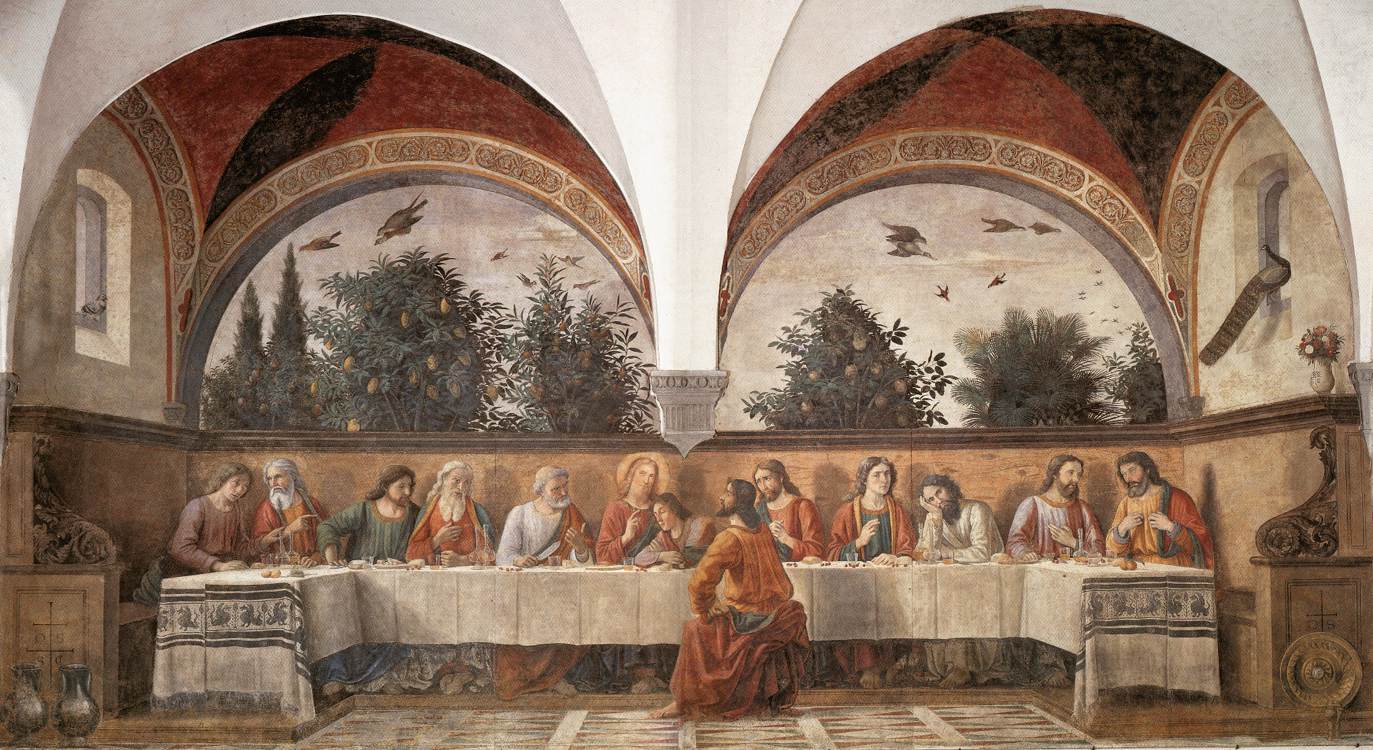
Before Leonardo’s Last Supper, there had been many more depictions of this crucial event. So what sets his version apart from the others? First, in terms of technique, Leonardo did not use the prevalent fresco style, which involved painting on wet plaster, because of which you only had a limited time per day to work. Instead, he used a combination of oil and tempera on dry plaster, allowing him to create vivid details and a realism that elevated his version over the dry and silent feel of the others. Compare this with the fresco painting on the opposite wall of the dining hall, done around the same time: Crucifixion of Christ by Donato Montorfano. The major downside of not doing the fresco method was that even during his lifetime, the work started flaking and deteriorating, whereas most of the original work by Donato remains. However, the level of detail and time provided allowed Leonardo to set his dramatic narrative in motion.
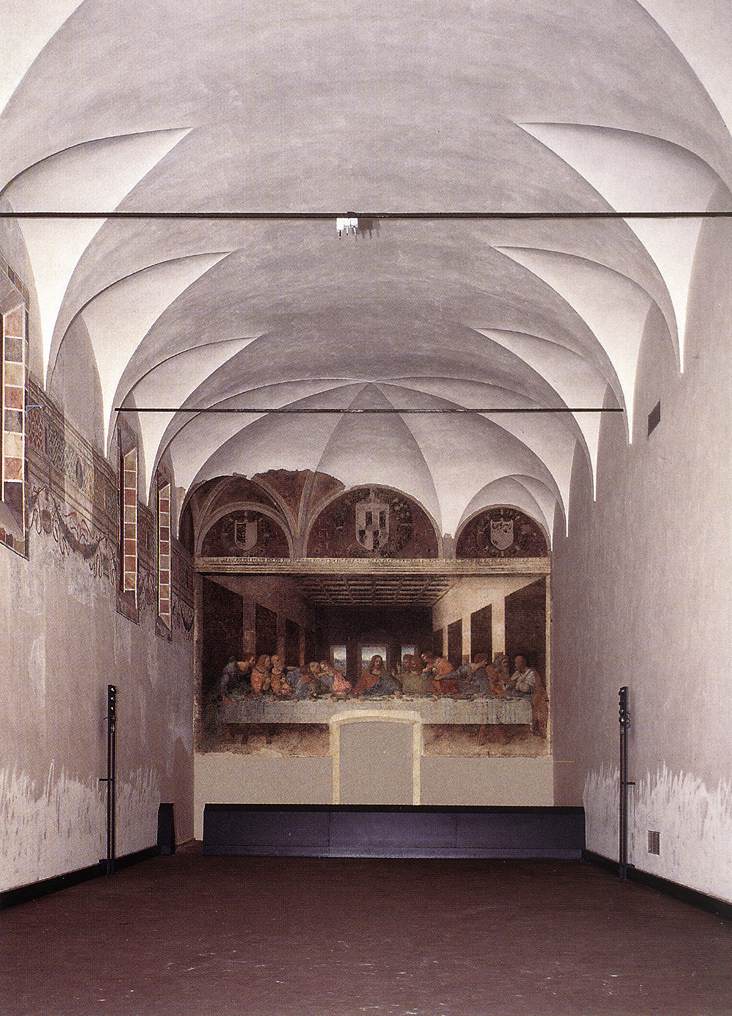
Now, let us enter the dining hall of Santa Maria delle Grazie and imagine the monks seated around the room at their table, eating. Before them rises up a psychological play in motion with all the lines of perspective in the room and, by extension, the painting vanishing on the central calm and enlightened face of Jesus. The light coming from the dining hall window seems to merge with the light emanating from behind him. We and the monks are immersed in the scene.
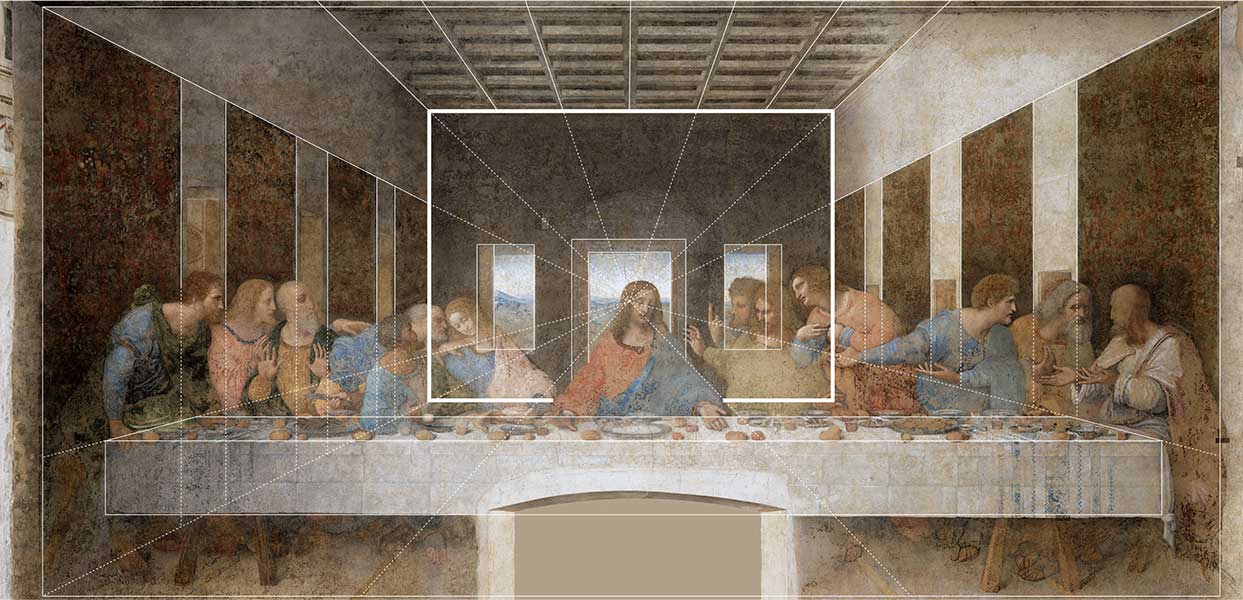
Jesus has declared, “one of you will betray me,” creating psychological shock-waves all around him as he sits as the serene, stable center. The 12 apostles are arranged symmetrically around him in groups of 3, with a wide range of reactions and symbolism. Disbelief, confusion, fear, sadness, guilt, desperation, secrecy, resignation, and on and on displayed in attitudes, gestures, and gazes.
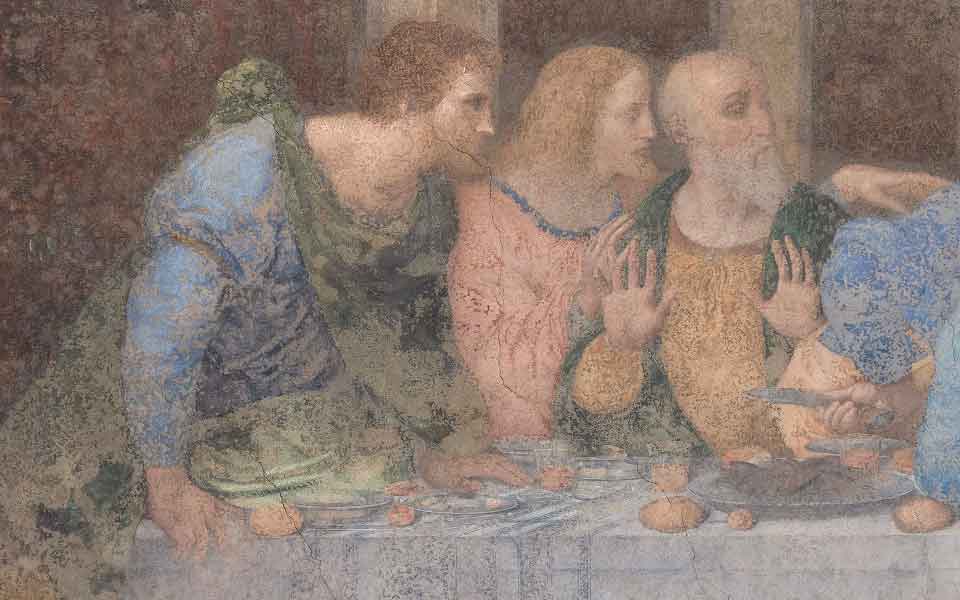
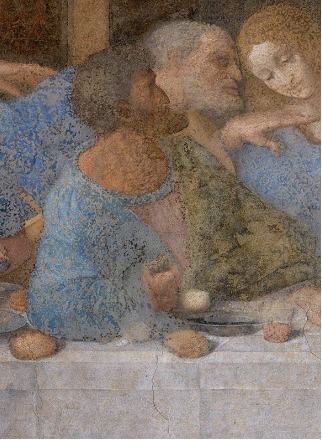
Unlike other versions of the scene, Judas is not set apart, sitting on the other side of the table, but is right there with the others. Judas is clutching his bag of coins (his payment for his betrayal), and next to him spilled salt, a bad omen. He is also in shadows, turned away from the light. Peter has a knife in one hand(symbolizing his later attack on the soldiers there to arrest Jesus) and the other hand towards John (Aggression and Vulnerability). Thomas with his raised index finger, proof of divinity or foreshadowing his doubt and need to see proof of resurrection? Or is it in some way a self-portrait of Leonardo and his doubts? It is fascinating to ponder the multitude of emotions and symbols on display. There are many layers of meaning, questions, and answers. Other versions of the scene usually place divine halos around Jesus and the apostles’ heads; here, Leonardo does not do that, creating a more human and relatable scene.
This emotional symphony is unfolding inside Leonardo’s geometrically harmonious creation. His masterful use of perspective and chiaroscuro (contrast between light and dark) puts us right in the middle of the action.
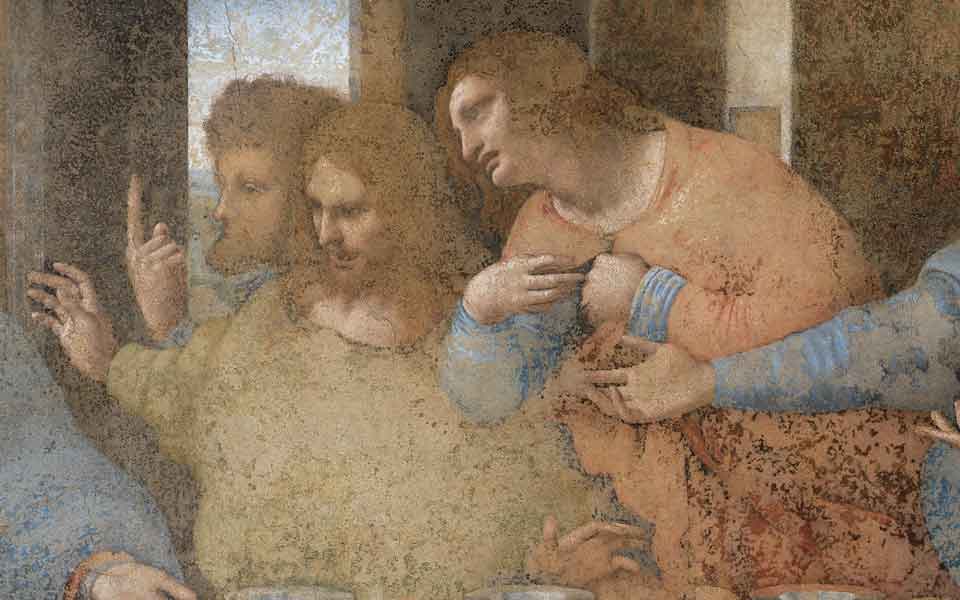
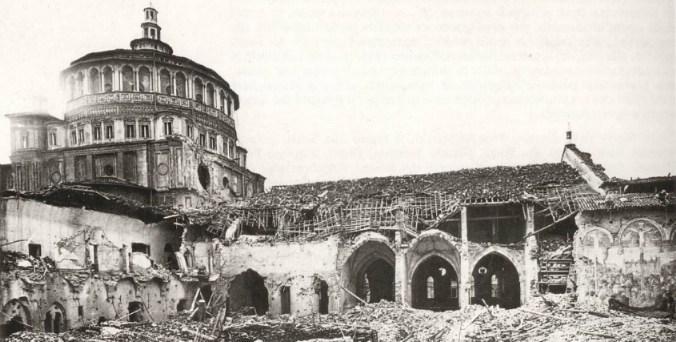
The fragile Last Supper has had a harsh history after Leonardo. Neglect, bombings during World War II, vandalism, the monks deciding to cut a direct door to the kitchen, destroying the lower part, the room being used as a stable for Napoleon’s soldiers, various controversial restoration attempts, and so on.
But the legacy remains as centuries of imitations, re-imaginings, and spoofs in art, books, movies, pop cultures, advertisements, etc, show. The theatrical play set in motion here with its universal theme of betrayal and explosion of contrasting human emotions is extraordinary. A master class in story telling, technique, and emotion.
Always be curious, seek out the blurred lines, and be illuminated.