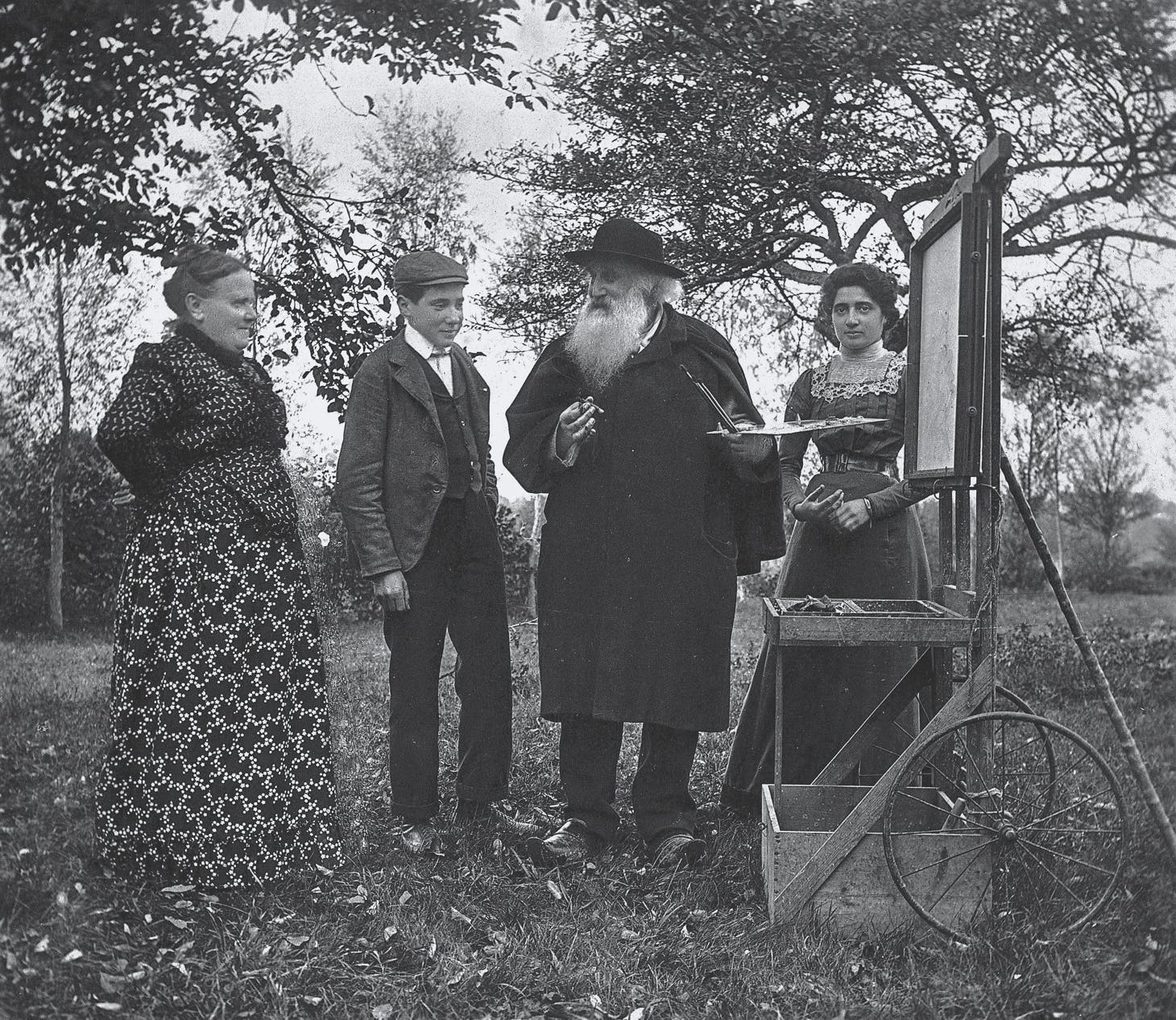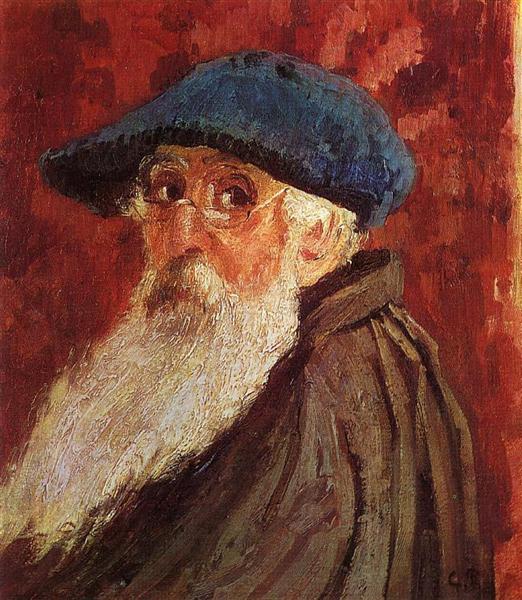
“Camille is our teacher…Without him, we would have all given up long ago.” “We are all derived from Pissarro.” Paul Cézanne
Who do you think of when you hear the word impressionism? Probably its superstars: Claude Monet, Pierre-Auguste Renoir, Edgar Degas, and post-impressionists: Paul Cézanne, Paul Gauguin. But who was the only person whose work was exhibited at all 8 Impressionist Paris exhibits from 1874 to 1886? Who was the quiet organizer, peacemaker, teacher, and “father” figure who brought all these genius but combustible personalities together? Would we even have such a revolutionary art movement without its gentle mentor? Let us unravel the story of this Caribbean-born revolutionary and why he matters today.
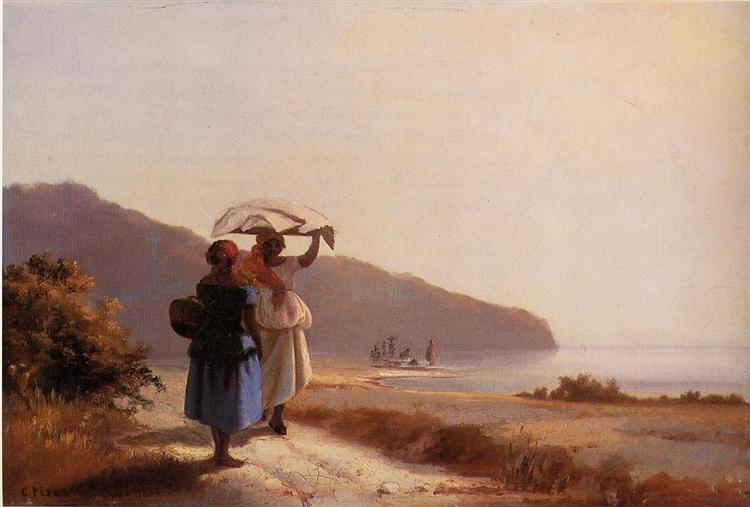
Did you know that such an instrumental figure in the creation of Impressionism was not even born in France? Jacob Abraham Camille Pissarro was born in 1830 in St. Thomas (in Danish West Indies, now part of the US Virgin Islands). His father was of Portuguese Jewish descent, and Camille himself had Danish nationality, not French. While he attended boarding school in France for a few years, he came back to St. Thomas to work in the family business when he was 16-17 years old. While making decent money and having security, his passion for painting and disdain for routine made him leave for Venezuela to just paint at the age of 21. He lived there for a couple of years, eventually moving to France.
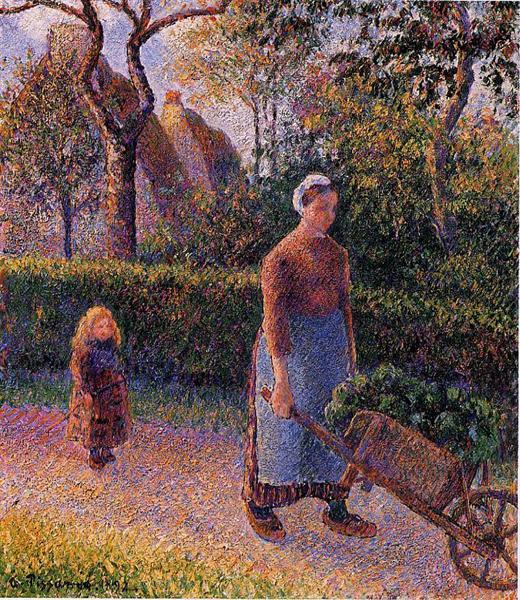
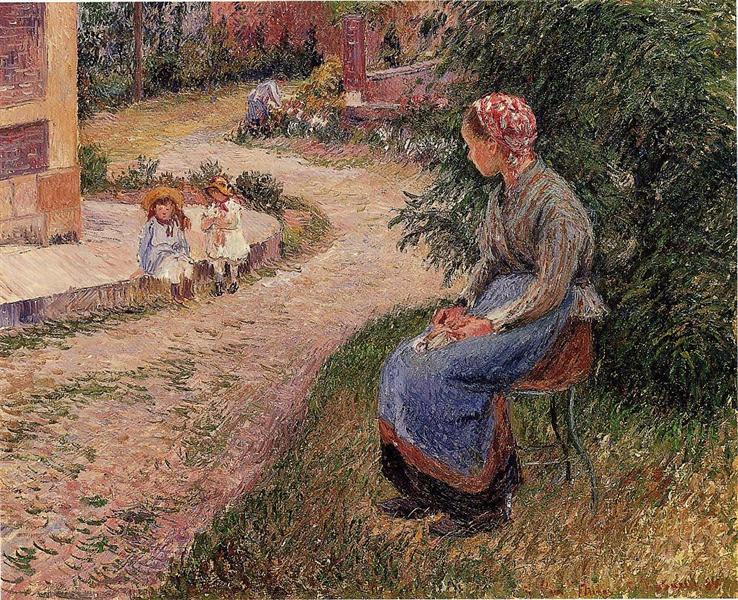
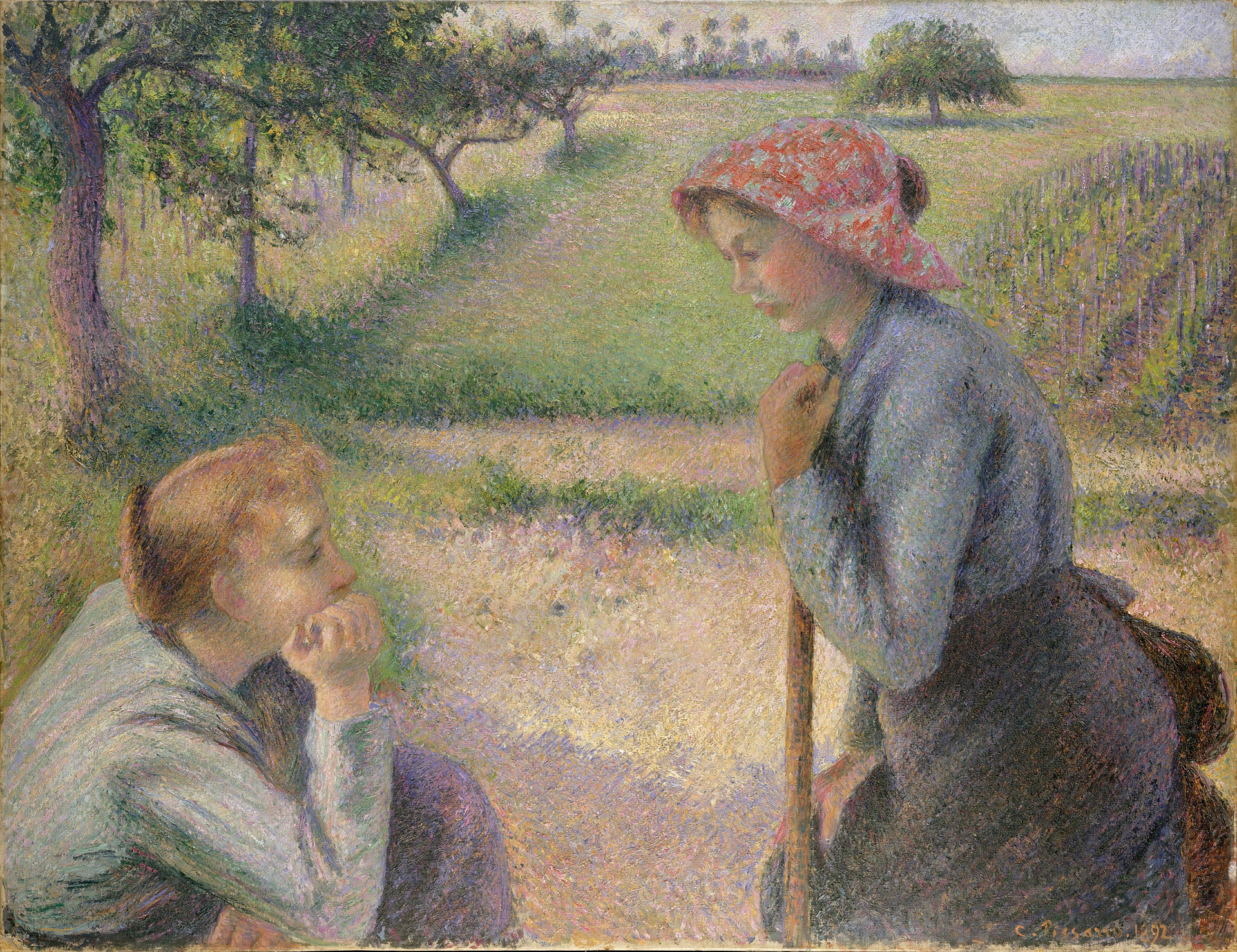
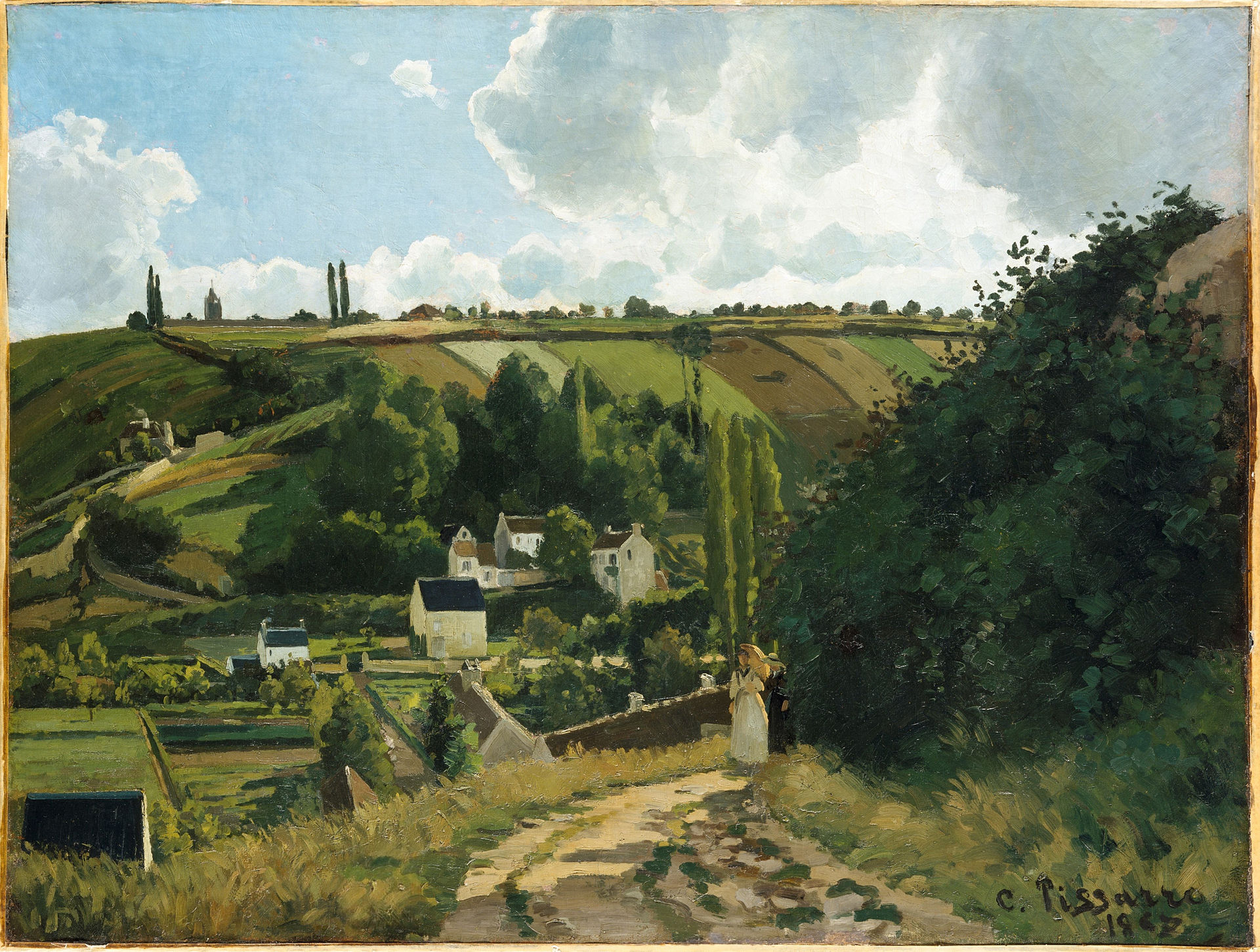
From the beginning, he felt stifled by the traditional tutoring and methods he was encountering. Pissarro had a great passion for depicting natural landscapes and rural scenes. He preferred to paint outside “en plein air,” often in one sitting. Pissarro’s subjects were not the historical/religious/mythological figures preferred by the Paris Salon, the traditional gatekeeper of “worthy” art at the time. They were not the life of Parisians at leisure preferred by some of his contemporaries. Instead, Pissarro brought the daily reality of village life into focus. These were not downtrodden, miserable beings in hardship but dignified, gentle beings working hard and living simply. He was also a brilliant landscapist, connecting us to natural settings and painting “the smell of the earth.”
While attending Académie Suisse in 1859, Pissarro met Monet and Cézanne, eventually connecting to this circle of kindred spirits, all unsatisfied with the prevalent traditional methods desired by the official Salon. They, along with Renoir, Manet, Sisley, writer Zola, and others used to meet at Café Guerbois in Paris to debate art. Pissarro was seen as a kind, warm-hearted personality whose wisdom was respected, and friendly encouragements were appreciated.
The Franco-Prussian War of 1870-71 saw Pissarro and his family leave France for Norwood, just outside of London, England, where he continued painting his brilliant landscapes and everyday scenes. Upon his return to Pontoise, France, he was faced with the destruction of his home and the survival of only 40 of the almost 1500 paintings he had produced over the span of 20 years, some being used as floor mats by the soldiers.
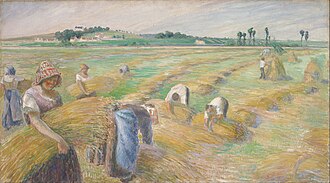
The continued discontent with the traditional Salon eventually led Pissarro and his fellow revolutionaries in 1873 to establish “Société Anonyme des Artistes, Peintres, Sculpteurs et Graveurs.” or “Anonymous Society of Artists, Painters, Sculptors, and Engravers.” From the beginning, Pissarro acted as the peacemaker and appeaser, keeping the 15 artists united and focused on their mission. They put on their first exhibit in 1874. Traditional critics were shocked to see their “vulgar” street scenes of everyday living and dismissed their emotionally expressive brushwork as sketch-like and unfinished.
Integral to Pissarro’s legacy is his role as the “dean of the impressionist painters.” He was the diplomat, wise unifier, and teacher who kept the egos of these often difficult genius artists in check. He was not the celebrity, but rather had the more difficult role of the quiet, dignified backbone. Paul Cézanne says, “He was a father for me. A man to consult and a little like the good Lord.” Mary Cassatt, the American Impressionist, calls Pissarro “the gentle teacher,” stating: “such a teacher that he could have taught the stones to draw correctly.” Henri Matisse states: “One could not help liking him, he reminded you of one of the prophets.” He was the gentle glue that kept it all together. The respect for “Père Pissarro” and his integrity could not be denied.
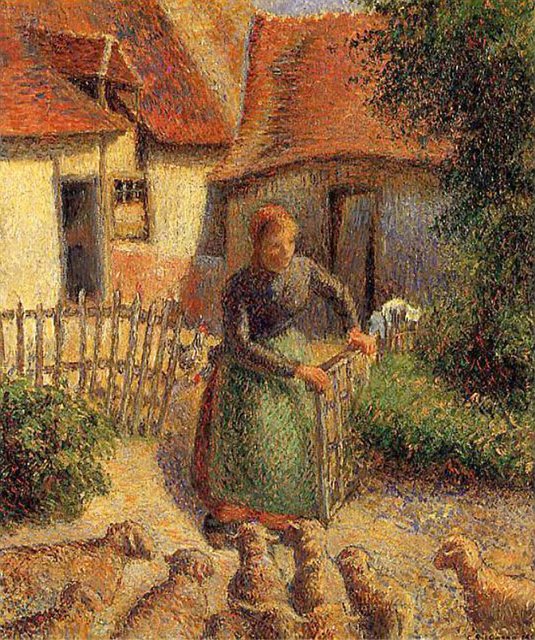
This continued even when Pissarro’s restless artistic soul and openness to new ideas made him step away from Impressionism. For a few years, he experimented with the neo-impressionist technique of Pointillism. Developed by artists Georges Seurat and Paul Signac, this was where small, distinct dots of pure color were used to create the illusion of blended colors and shadings when viewed from a distance. He eventually moved on from this, seemingly always returning to his beautiful rural landscapes and the dignified lives of people working in harmony with the land. This portrayal of the “common man” without any artifice and sense of community connects to his political anarchist views. Here, Anarchism is not a violent, destructive force but rather a Utopian philosophy based on an equal, fair society based on education and community and free of the constraints of the “establishment.” Art is not just for elites; it is for everyone.
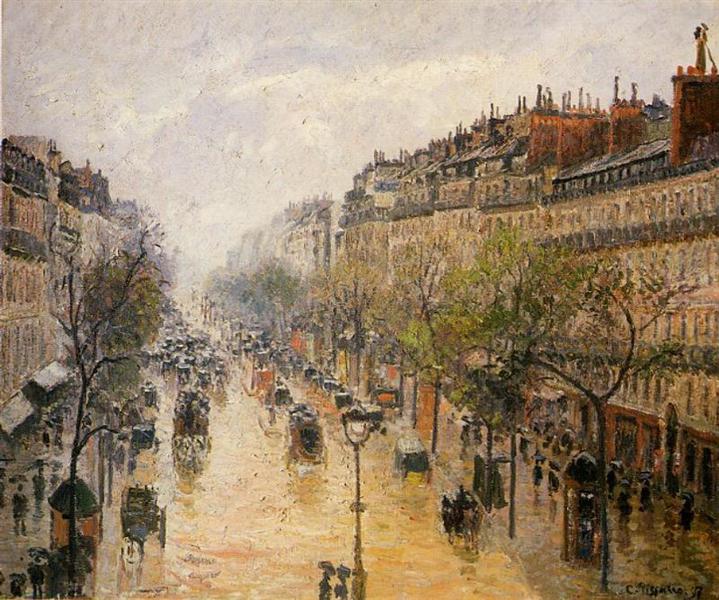
Pissarro’s later years were marked by an unfortunate recurring eye infection that prevented him from going outside to paint. So the resilient Pissarro adapted by renting hotel rooms in different towns and painting numerous stunning cityscapes.
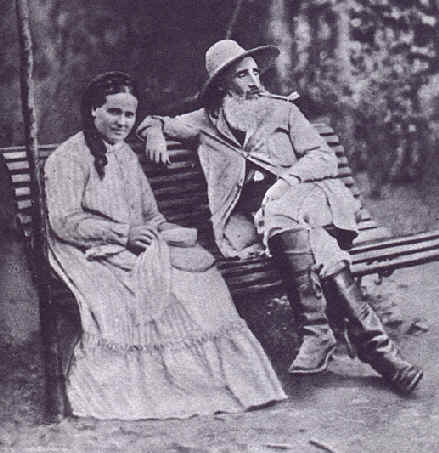
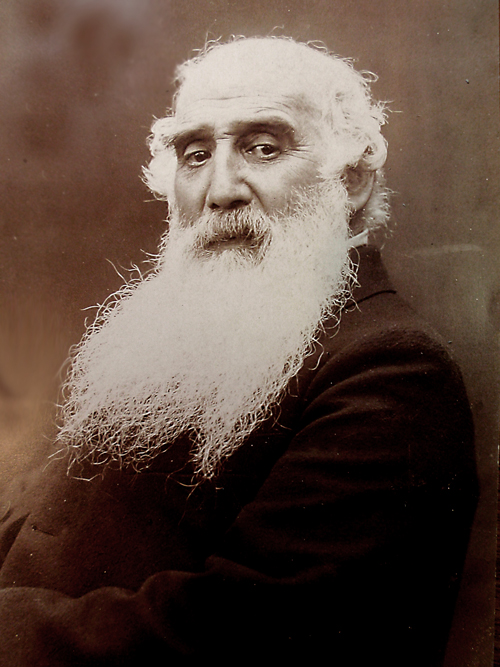
Pissarro’s light finally faded away as he left the world in 1903. He was not just a father to his fellow artists. He and his wife, Julie Vellay, had 8 children, 6 of whom became artists themselves. More astoundingly, the family’s presence in the arts continued through 5 successive generations.
Camille Pissarro was not a singular celebrity. He was a quiet revolutionary, community builder, teacher, and father, characterized by a stubborn integrity and a generous personality. Pissarro was the bond that allowed those around him to thrive while producing some brilliant works of his own in the process. Paul Gauguin, calling him his master, declares him “a force with which future artists would have to reckon.” Art historian Diane Kelder states that Pissarro’s work expressed “the same quiet dignity, sincerity, and durability that distinguished his person.” Pissarro urges us to “paint the essential character of things.” He wants us to open our eyes, connect to nature, and see the extraordinary in the ordinary.
Pissarro’s lesson isn’t just how to see light—it’s how to build a community, treat ordinary lives as worthy, and reinvent without the hype. In a world of algorithms and a world in turmoil, he’s proof that revolutions don’t have to be loud and that steady generosity and community can still result in change. He states: “Everything is beautiful, all that matters is to be able to interpret.” So change the lens through which you see the world, and if you are interested in knowing more about impressionism and what Manet had to do with the female gaze, please read my other piece on the subject.
Always be curious, seek out the blurred lines, and be illuminated.