What are you seeing? More importantly, what does she see as she looks back at you? What caused such an outrage at this painting’s debut 160 years ago that it was attacked by umbrellas and walking sticks? How does this challenging, confrontational gaze connect to the current day with its social media, AI, and the continued power dynamics of the image? How did Édouard Manet challenge societal norms and turn objects into subjects? Let’s look into the mirror.
But first, who was this revolutionary? Édouard Manet was born in Paris in 1832 to an affluent and privileged family. His father was a judge and wanted Édouard to pursue a law or naval career, but failing at both, he ended up undertaking the formal art education of the day.
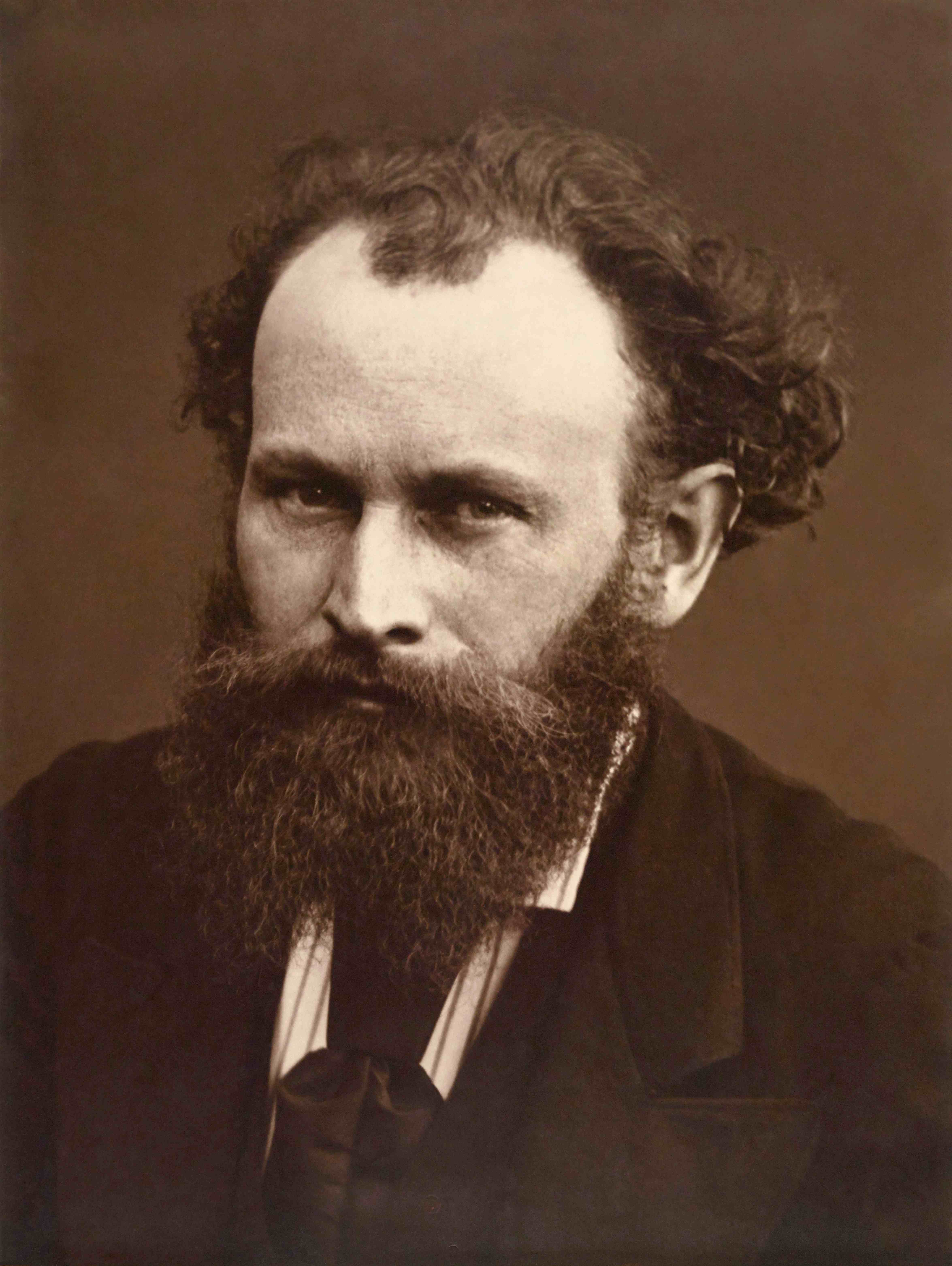
So how did this privileged kid become the challenger of traditional conventions, the bridge between realism and impressionism, and, in short, “the father of modern art”?
The answer lies in what he chose to see. From early on, Manet was not interested in the classical scenes of idealized mythological, religious, and historical figures. He wanted to candidly paint the modern, contemporary life that he was seeing all around him. He was drawn to “banality of daily life”.
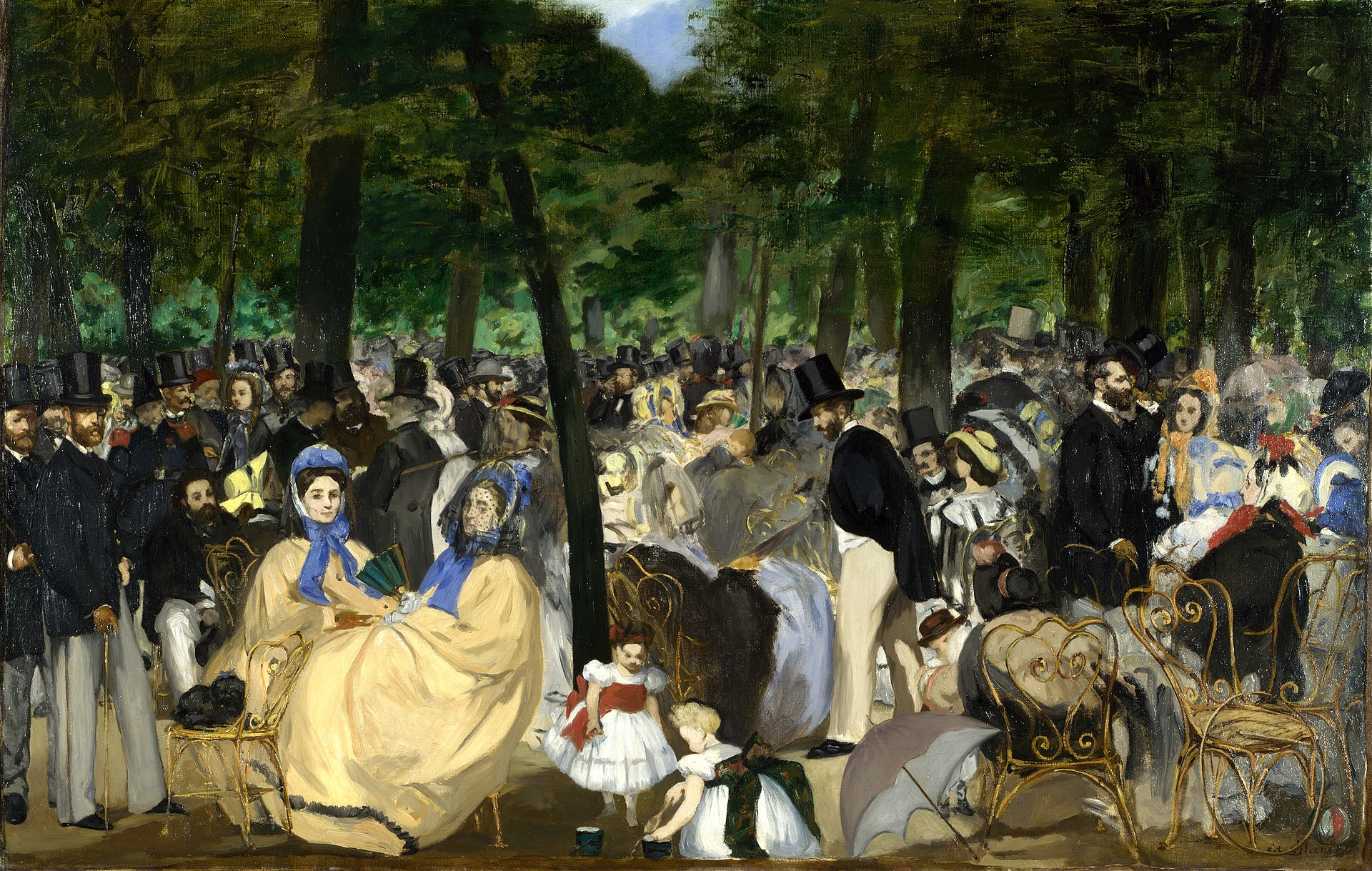
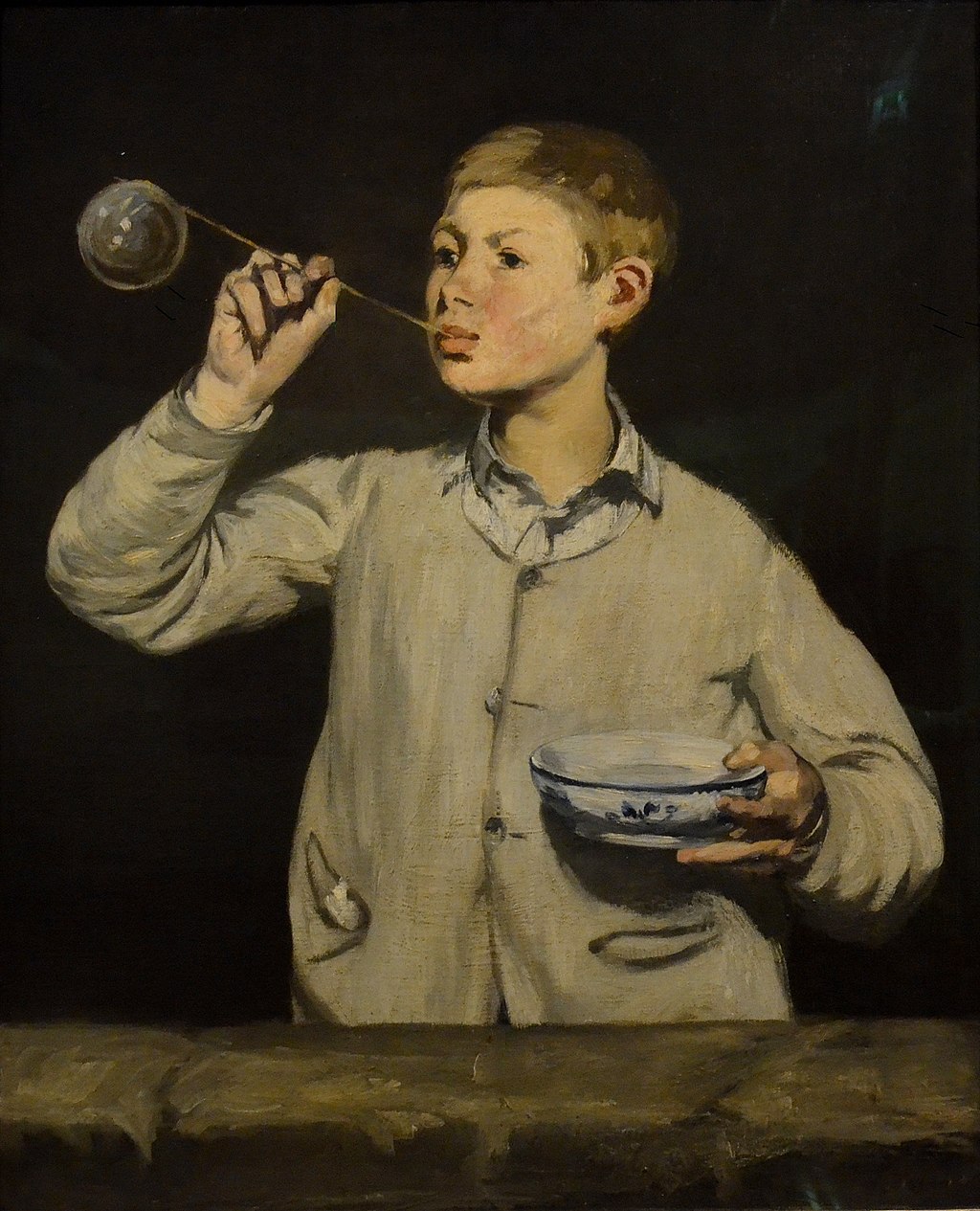
Manet painted ordinary people: artists, singers, beggars, courtesans, barmaids, people in cafes and at leisure; real people, not historic heroes. For example, in “Music in the Tuileries,” he paints a typical contemporary scene (including himself, friends, and family) at leisure in the famous Paris garden.
At this time, the art scene in Paris was dominated by the rigid, classically oriented official Salon, which served as the gatekeeper of what was “proper” art. In 1863, they rejected about 2/3 of the submissions they received for their exhibit. The artists’ protest led Napoleon III to create an alternate exhibit for these rejected works in Salon des Refusés (Salon of the rejected). Among these was Manet’s “Le Dejeuner sur l’herbe” or “Luncheon on the Grass.” The painting resulted in major public outrage. Both the technique and the subject matter were controversial and revolutionary.
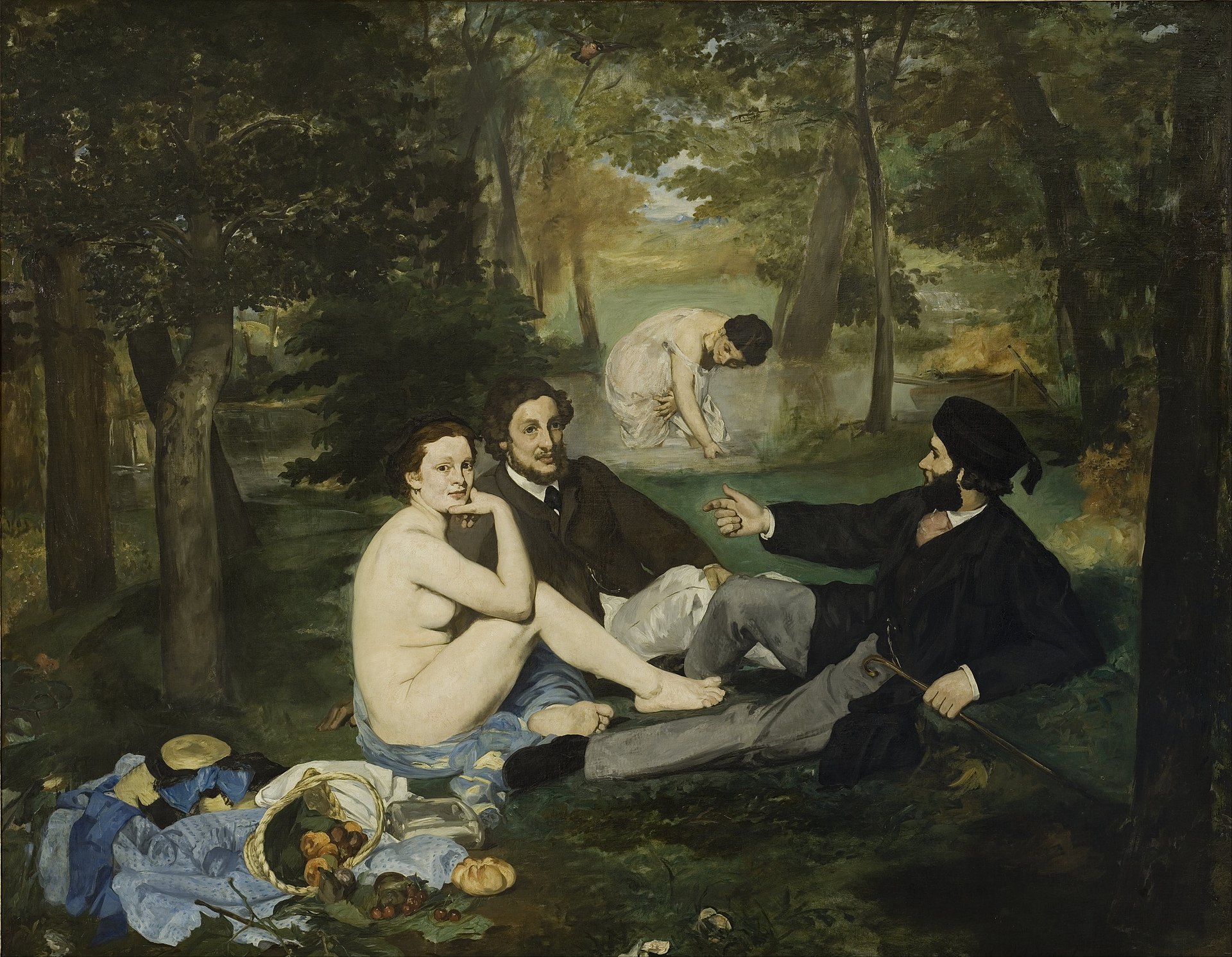
So what made it so shocking? Manet took inspiration from 2 classical paintings: Marcantonio Raimondi’s engraving “The Judgment of Paris,” based on a drawing by Raphael, and “The Pastoral Concert” by Giorgione or possibly Titian. Manet takes these classical works and turns them on their head by injecting the scene with ordinary contemporary Parisians: two recognizable clothed men and a regular naked woman staring directly at you.
It was not the nudity that was shocking. There were plenty of classic nudes of women, passive and idealized, of mostly mythical figures. But here the woman is real and gazing directly and unashamedly at the viewer. The people in the painting are recognizable, and the unbashful stare hit a nerve with the viewers.
But Manet wasn’t just challenging what to paint but also how to paint. Manet’s bold brushwork, flatness, and distorted perspectives were also met with harsh criticism. His work was dismissed as “unfinished” and sketch-like, lacking the prevalent smooth, polished look. Manet rejected the idea of painting as successive layers of paint on a dark-toned background in favor of a direct, alla prima method using opaque paint on a light ground, allowing the completion of a painting in one sitting and without letting the previous layers dry. This was later adopted by the impressionists and others, setting the standard for painting in oil for future generations.
Manet declared: “I paint what I see and not what others like to see.” So he brings to the boil what he steered up in “The Luncheon on the Grass” with his 1865 follow-up, “Olympia.”
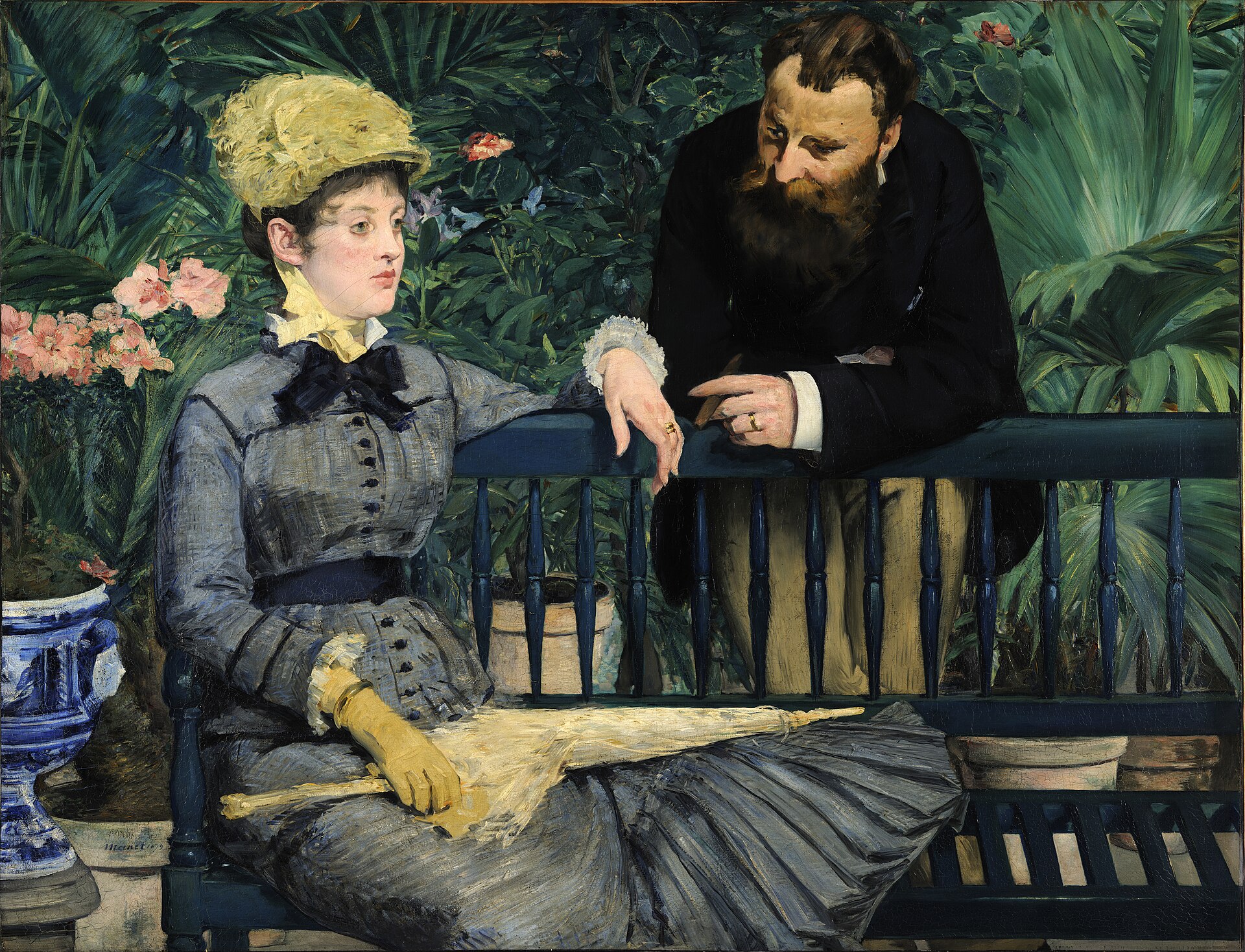
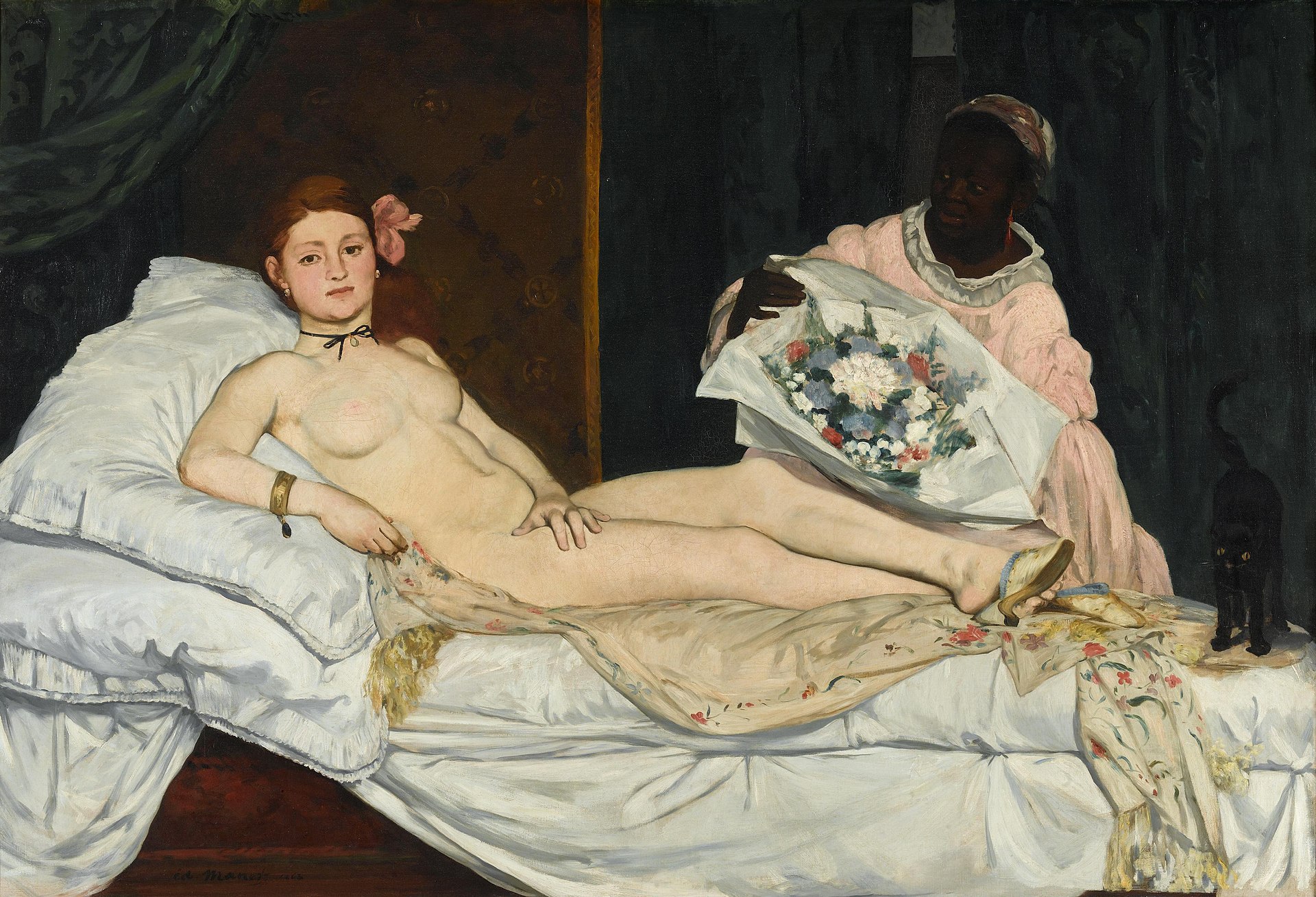
Upon its debut at the Salon, “Olympia” immediately caused a scandal. The title is a common name used for prostitutes at the time, and here you are confronted with a real, confident one once again staring you down. Manet once again takes inspiration from Titian’s “Venus of Urbino” but replaces the subject with someone more real and human, thus reimagining the classic nude.
Every detail seems calculated to provoke. The scene is full of symbols associated with sexuality, sensuality, and wealth: The orchid in her hair, a bracelet, pearl earrings, a ribbon around her neck, mule slippers, an oriental shawl, and a bouquet of flowers (from a male client, perhaps). Titian’s loyal dog is replaced by an upright black cat, a symbol of promiscuity and even a French slang term for the female anatomy.
Manet is challenging society to confront the status of prostitutes and how women in general are perceived. This is not an idealized, passive, ashamed object of beauty created to please and entice a male gaze. This is a real woman in control, both gaze and body defiant and confrontational with no notion of modesty.
The public’s response was explosive. This unsettled the public, crowds even attacking it with their umbrellas and walking sticks. Olympia refuses to be objectified and directly confronts the viewer’s gaze. The concept of the “male gaze” refers to how women have traditionally been depicted from a masculine, often objectifying perspective—passive, beautiful, consumable. Manet flipped that. He gives women the power of looking back.
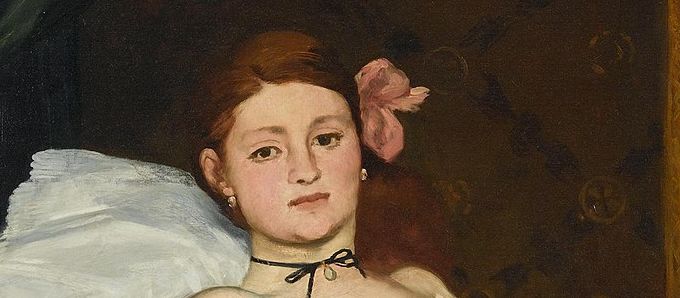
But there is more to this story. Here we should also mention Laure, the servant seen in this painting. Originally dismissed as just a “chromatic element,” it is now seen as a continuation of Manet’s attempt to show all his modern contemporaries living their lives. The painting comes 17 years after the abolition of slavery in France and depicts a free, wage-earning black female figure, not the “exotic” unclothed treatment typical of the time. Her clothing is a blend of European and Antillean influences, reflecting the emerging hybrid cultural identity. Laure was a real person who modeled 3 times for Manet and is now a major figure regarding race relations in art history, and has influenced many modern artists.
And then there is the woman at the center of it all. The confident figure seen in both “Olympia” and “Luncheon on the Grass” was also real and modeled several times for Manet and other artists. Part of the public shock was perhaps seeing this recognizable figure inside such paintings. Her name was Victorine Meurent. While Manet’s depictions falsely led to the public’s assumption that she was a prostitute, she was actually a hard-working professional model, dancer, and artist known for her strength of character.
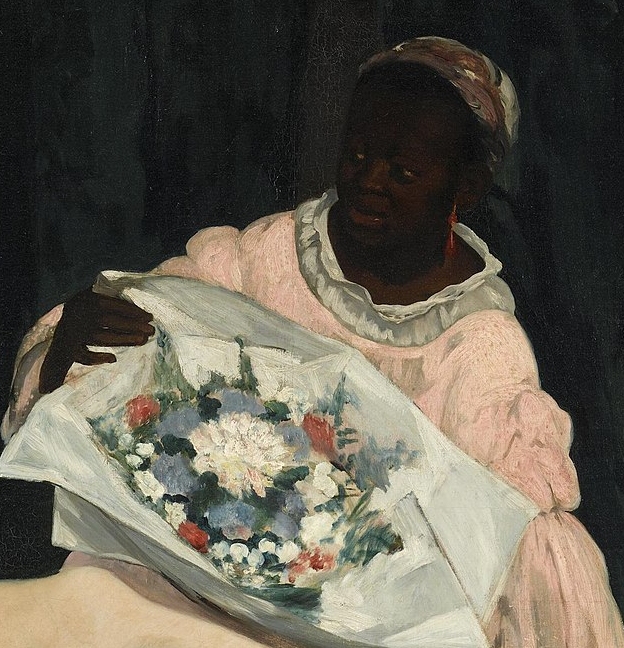
Manet’s revolution didn’t end with his canvas. Édouard Manet’s relationship with the Impressionist movement is complex and pivotal, marking him as a foundational figure in modern art who both influenced and was influenced by the Impressionists, yet maintained a distinct path. Manet’s rejection of tradition, modern subject matter, and various techniques set the stage for impressionism. He was at times both a friend, mentor, and financial supporter of them. Despite his profound influence, Manet never fully identified as an Impressionist and maintained a distinct artistic and professional path. Some differences include Manet’s preference for Salon exhibitions vs. independent shows, working in a studio rather than outdoors, and keeping black and gray in his palette. Manet was friends with many impressionists (sometimes competitively), such as Degas and Monet, and more intimately Berthe Morisot, who later married his younger brother Eugene.
Furthermore, Manet counted famous novelist Emile Zola and poet Charles Baudelaire as friends and champions.
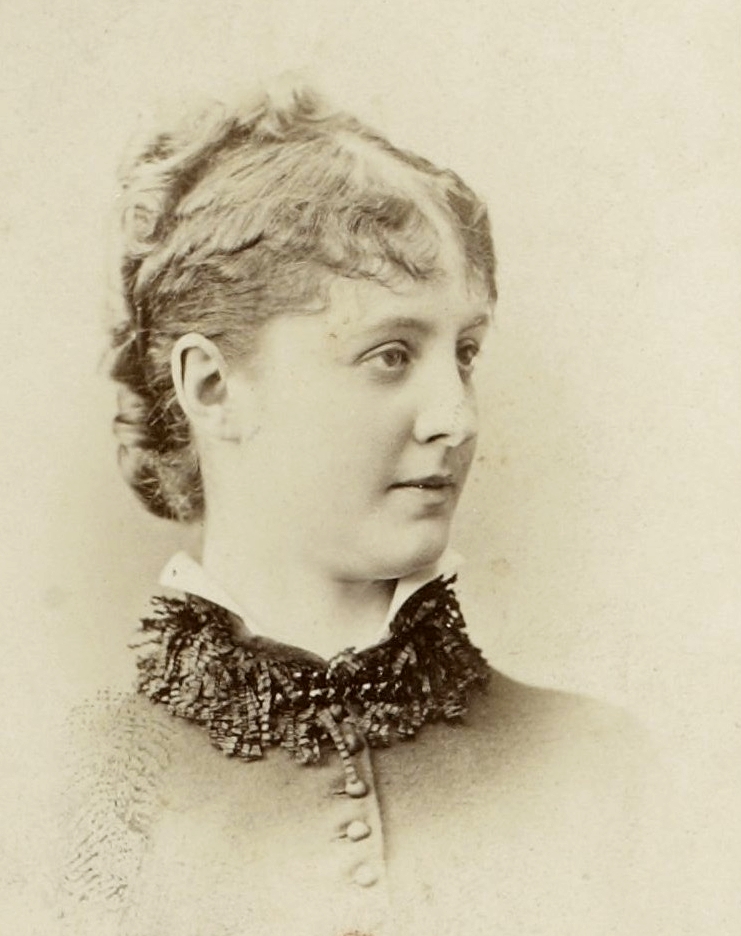
This champion of modern life once again challenges us to step into a mirror in perhaps his last masterpiece: 1882’s “A Bar at Folies-Bergere.” We are in a Paris nightclub, face to face with a barmaid with a mirror in her back. The perspective is rather distorted, and her expression is ambiguous and hard to read. Melancholy? Bored? Rebellious? Isolated? Is it a critic of modern life’s commodification of human interactions? Is she being seen or is she seeing us? The object seems to become a subject in control again? Or is she?
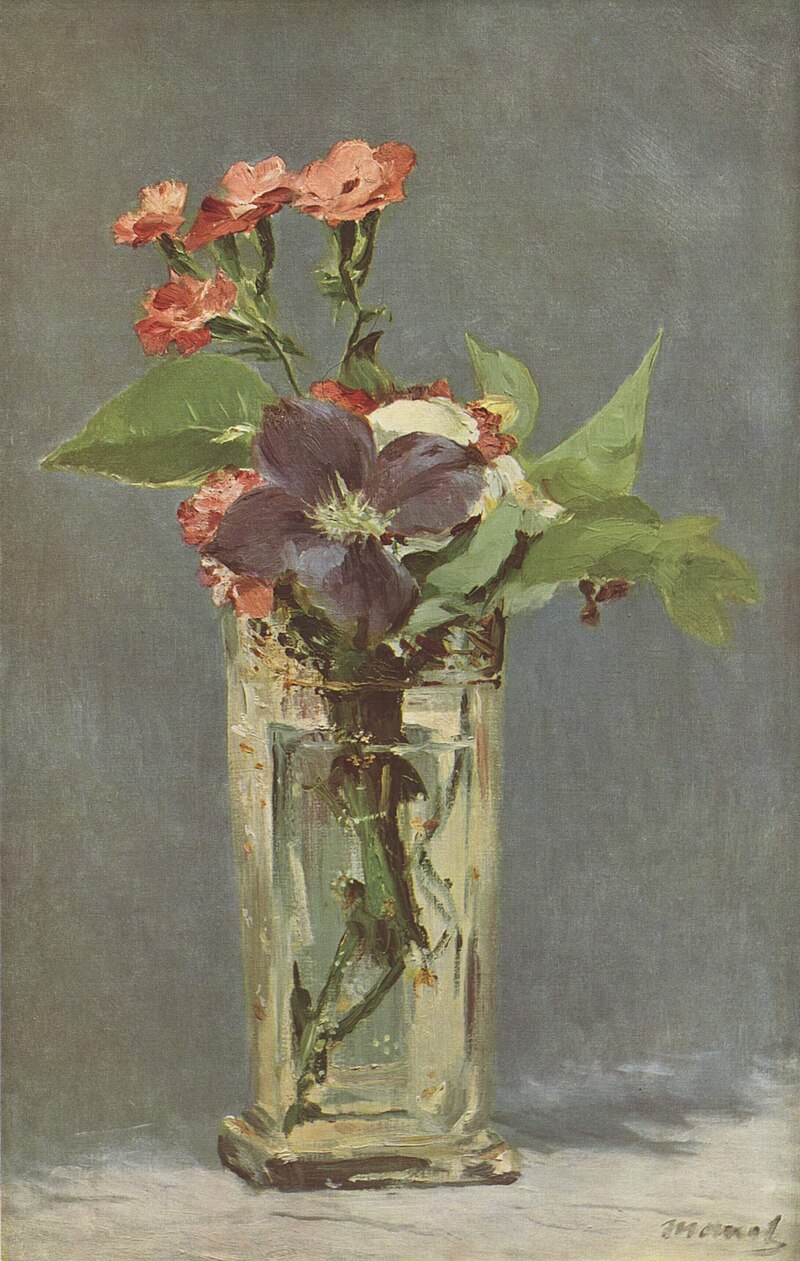
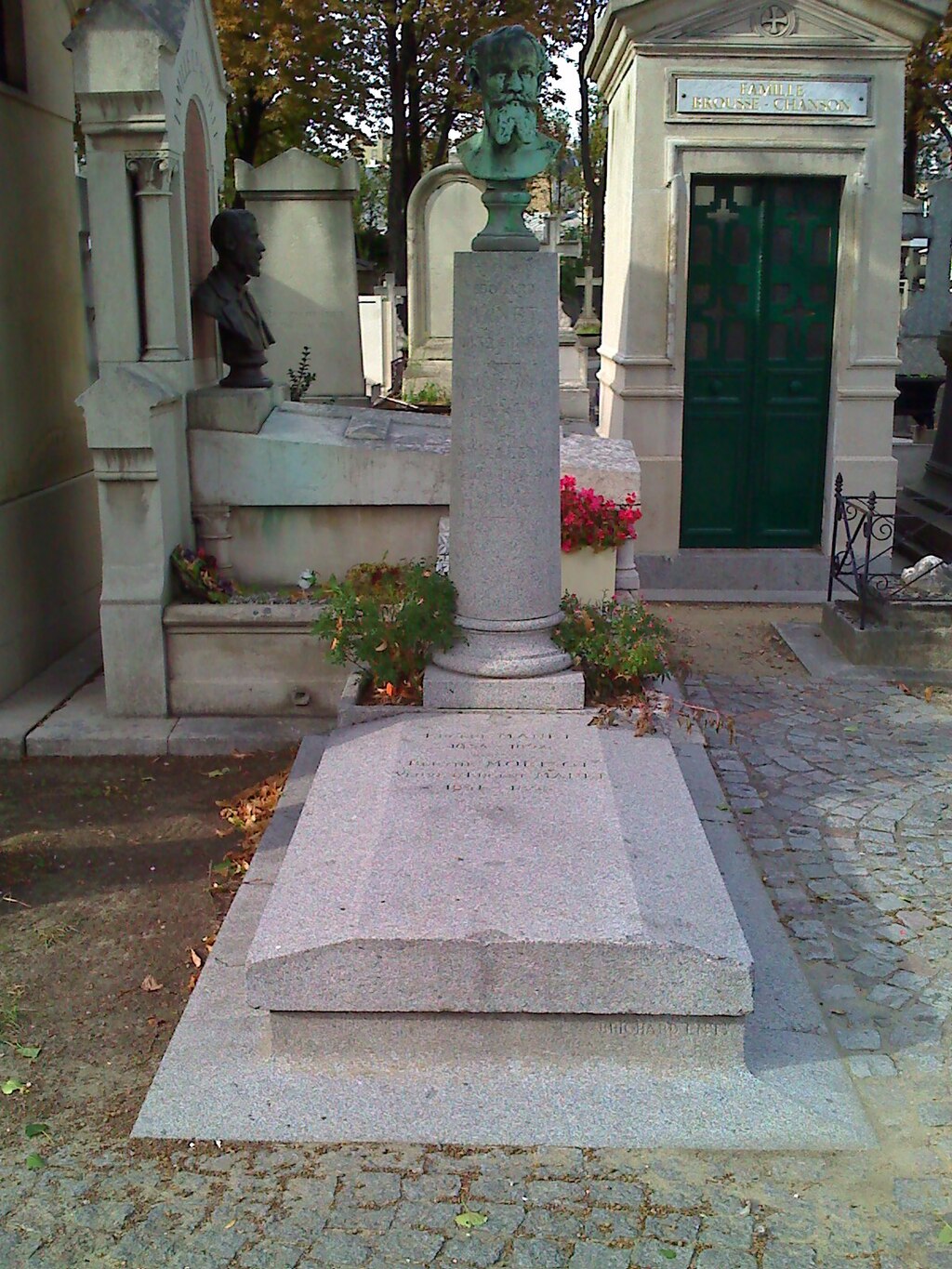
Sadly, time was running out for this fascinating man. In his mid-40s, Manet’s health started to deteriorate. He suffered from Tabes dorsalis, a neurological disorder resulting from late-stage, untreated syphilis infection. This led him to draw more small-scale still life and take refuge in painting flowers in a vase, finally passing away in 1883 at the age of 51
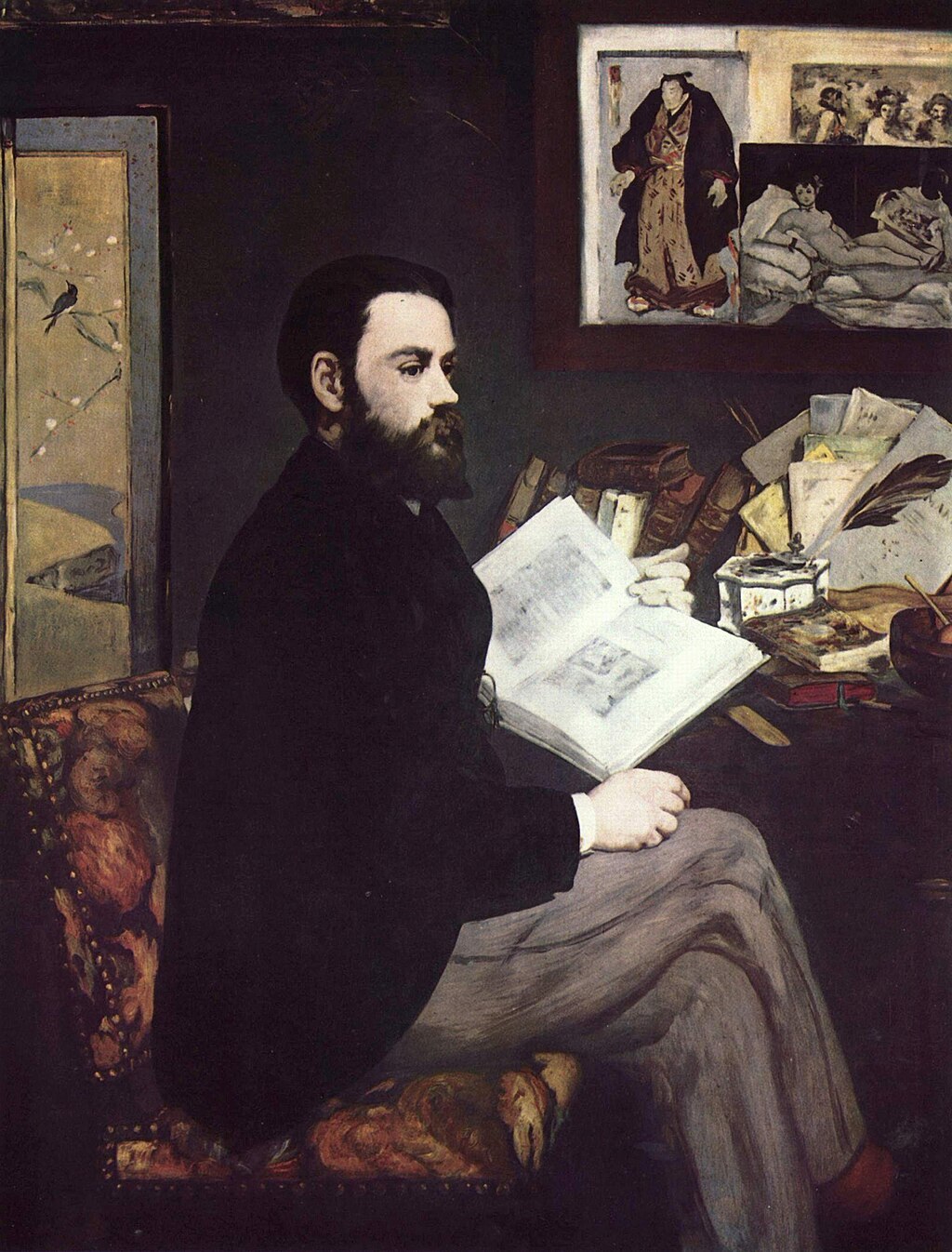
.
Besides his tremendous influence as the forerunner of impressionism and modern art and depiction of ordinary and marginalized classes living their normal lives, it is perhaps his direct challenge to the way we see and perceive an image that is most intriguing about Manet. Manet’s female gaze foreshadows the agency and deliberate self-representation of online profiles and selfies, and women curating their own image. In the age of modern advertising, AI and social media algorithms, power dynamics, and objectification of women and minorities continue. Just like Manet, we must face uncomfortable truths and challenge traditional power structures. We will seek authenticity, not idealization. We will be critical consumers of the image and recognize the power of the gaze. Women are not symbols and objects to be looked at; they are subjects and agents of their own lives.
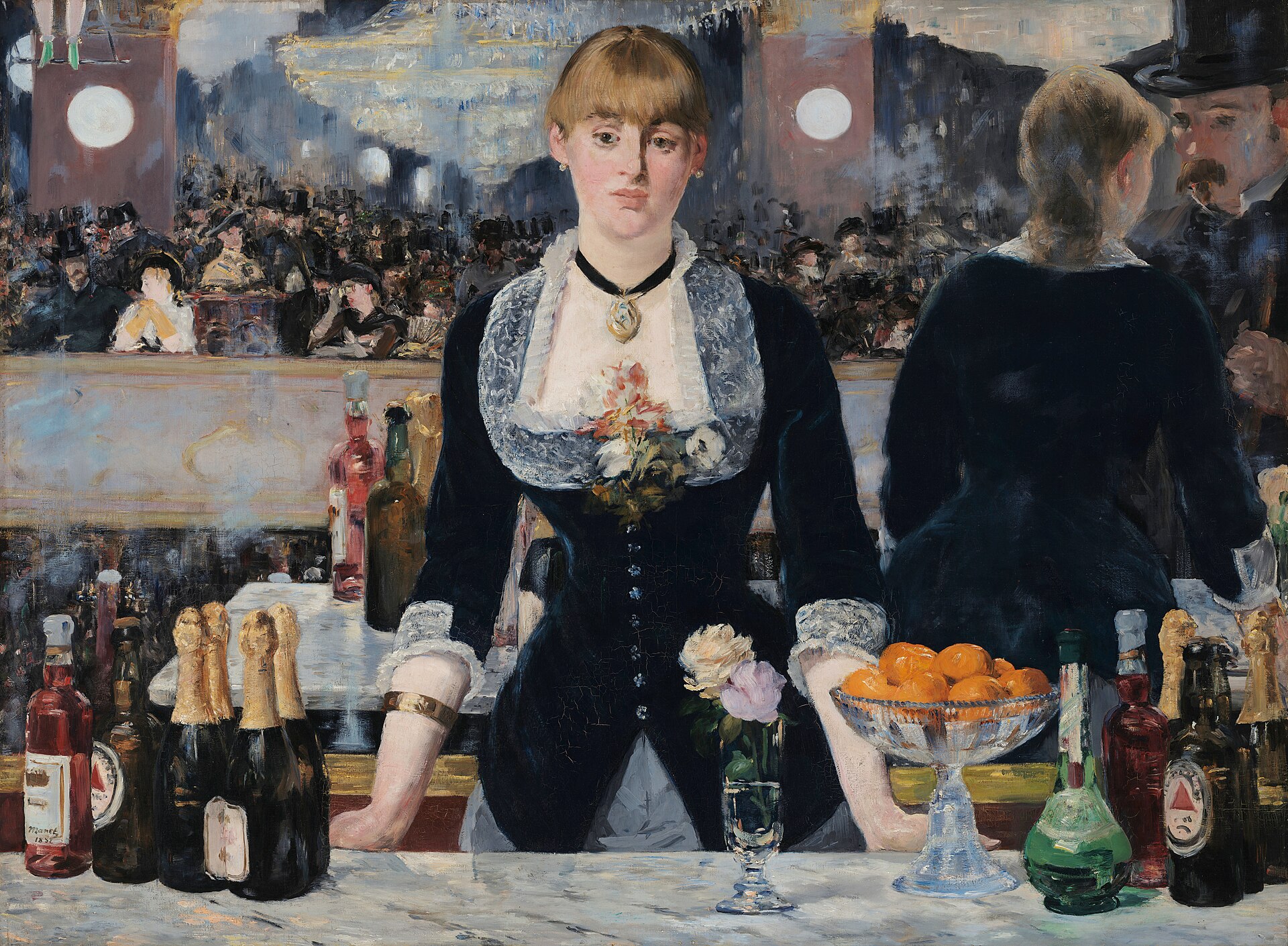
Manet asked us to look differently—at women, at modern life, and even ourselves. The mirror is still there. The question is, can we bear to look? Please let me know what resonates most with you about Manet.
Always be curious, seek out the blurred lines, and be illuminated.